Purchases
The Friends have contributed towards the purchase of the following items for the Library:
Arrian of Nicomedia. Epicteti Philosophi, Praeceptoris Sui, Dissertationibus Libri IIII … Enchiridion (Basel, per Joannem Oporinum, 1554)
Spring 2026
This first Latin edition of the Discourses of Epictetus as set down by his disciple Arrian of Nicomedes has an exceptional provenance, from the libraries of the first great Scottish bibliophile, Bishop Henry Sinclair (1507/8-65), a significant Scottish Renaissance philosopher, Robert Balfour (c. 1553–1621), with his annotations in Greek, and the great French political philosopher, Charles Louis de Secondat, Baron de Montesquieu (1689-1775).
Eleven autograph letters from Colin MacLaurin to James Stirling, 1728–1738
Spring 2026
Colin MacLaurin (1698–1746) was one of the earliest adopters of Newton’s theories and subsequently professor of mathematics at Marischal College, Aberdeen, and then in Edinburgh from 1726. James Sterling (1692–1770) may have studied briefly in Edinburgh before matriculating in 1711 at Balliol College, Oxford. He travelled and studied widely in Europe. From 1737 to the end of his life he was chief agent for the Scotch Mines Company at Leadhills, South Lanarkshire.
Italian Decorated Paper (1770-1840): A Collection of Twenty Whole Sheets
October 2024
These sheets were produced during the second half of the 18th century and the first half of the 19th century, through the old technique known as woodblock printing. All the leaves are much the same standard size, measuring between c. 480x370cm and c. 450x340cm. Decorated paper was widely produced in Italy between the 17th and the 19th centuries. Its production flourished especially during the second half of the 18th century and the first decades of the 19th century. The Remondini family in Bassano del Grappa, Veneto, became the largest Italian producer of decorated paper and popular prints from about the 1770s to the 1840s. Decorated papers, in several hundreds of colour combinations and different patterns, were crafted mainly through the process of woodblock printing, while popular prints were usually produced through copper engraving and etching.
A Gathering of Leaves: Botanical Art and Science
January 2024
The Friends purchased a group of books with botanical themes to honour the terms of a bequest. These included two of the bindings from among the Distinguished Winners of the 2022 Designer Bookbinders’ International Competition, A Gathering of Leaves, themed around plants, flowers, and gardens. Both bindings are by Scottish binders. Tom McEwan’s binding is on a copy of Hugh MacDiarmid’s A Drunk Man Looks at a Thistle (Bdg.f.4) and is inspired by the thistle colours of purple and green with a spiky pattern on dyed and tooled goatskin. Gillian Stewart’s binding is on a copy of the Old Stile Press edition of The Journey of Thomas the Rhymer (Bdg.f.5) and uses cyanotype prints of grasses and flowers to create a misty, dreamy forest effect. The third botanical book is Victorine de Chastenay’s 1802/3 Calendrier de Flore, an educational work written for a female audience, a French Enlightenment philosophical style. The book describes flowers and plants in scientific detail, referencing Linnaeus and explaining technical terminology, consciously using only words – the work is not illustrated.
FRIENDS OF EDINBURGH UNIVERSITY LIBRARY 1962-2022:
TREASURES COLLECTED
This online exhibition marked 60 years of purchasing by the Friends, find it here.
Oskar Kokoschka – Die Traümenden Knaben [The Dreaming Youths]
July 2023
In 1907 Oskar Kokoschka, later an eminent artist, writer and educator, was still a student at the progressive Kunstgewerbeschule in Vienna when he produced Die Traümenden Knaben. Comprising a poem of Kokoschka’s own composition – a fairy-tale dream sequence of adolescent sexual awakening – illustrated with colour lithographs which draw on folk and medieval art and the Jugendstil, it offers a tantalizing visual content with a strong narrative running through it. A key artist’s book, Die Traümenden Knaben is a valuable addition to the University’s Heritage Collections and will provide opportunities for both student projects and research scholars in many fields.
Photograph album of Sheena Tennant Kendall, 1919-1925
September 2022
This acquisition complements Sheena Tennant Kendall’s diaries for 1919-1924, already held in the University’s archives, which cover the years she spent in Japan with her father, the industrialist James Tennant and husband, Herbert Moorhouse Kendall, then employed by the Peninsular and Oriental Steam Navigation Company. The album, which covers much the same period as the diaries, includes photographs of the aftermath of the Great Kanto Earthquake of 1923. Her photographs convey her interest in Japanese architecture and also record the variety of expat social life. The album records Tennant Kendall’s further travels in Egypt, Burma, Ceylon, Malaysia and Shanghai.
Further Lyell papers
July 2020
These papers consist of 118 autograph letters and documents sent to members of the Lyell family and 57 portraits, comprising 40 albumen print photographs, 16 engravings, and 1 lithograph. The collection was compiled and retained by the Lyell Family, Kinnordy House, Scotland, until 2018 when auctioned by Sotheby’s on order of the Executors of the Late Charles, 3rd Baron Lyell.
Sir Charles Lyell’s 294 Geological Notebooks
November 2019
Sir Charles Lyell’s 294 geological notebooks – in which he recorded his ideas, theories, drawings and discoveries – were purchased by the Library following a successful fundraising campaign.
The Friends of Edinburgh University Library pledged £10,000 from core funds, and individual Friends donated an additional £30,650, making the total Friends’ contribution £40,650.
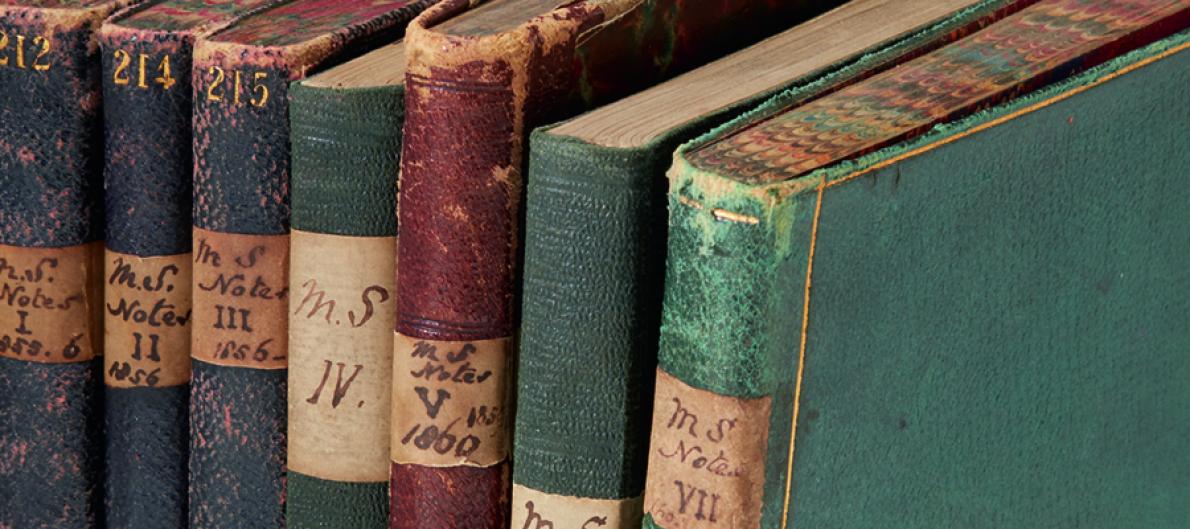
The notebooks were due to be sold abroad. However, a temporary export bar was imposed by the UK Government, giving the University of Edinburgh and supporters the opportunity to raise the necessary funds to purchase them. The purchase price was originally set at £1,444,000, but reduced to £966,000 thanks to a restructuring of tax liability. A full public campaign was launched to help raise awareness and funds. Over 1,100 supporters pledged to save this historic archive.
To read more about the ongoing project see Charles Lyell Notebooks Project.
Sir Charles Lyell (1797-1875) was the greatest public figure in science of the mid-Victorian period. His geological breakthroughs paved the way for Charles Darwin’s theories. Indeed, Darwin once wrote: “I always feel as if my books came half from Lyell’s brains”. Best known for his bestselling book Principles of Geology (1830-1833), Lyell made acceptable the theory that the earth was millions of years old and that it was shaped by geological processes still active in the modern era. He made it possible for people to think about the earth as a dynamic and developing planet in the way we do today.
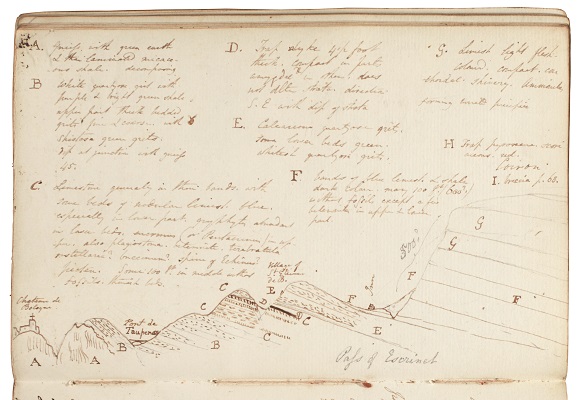
This collection joins the Library’s extensive history of science collections. Together with the existing Lyell collections (particularly the 36 boxes of Lyell correspondence gifted in 1927 and the specimens in the Cockburn Geological Museum) this makes Edinburgh the world centre for Lyell studies. It will also give us an outstanding opportunity to engage our communities with the story of Scotland’s place in the natural sciences.
The Department for Digital, Culture, Media & Sport Press Release (which provides some useful background to the fundraising campaign) is online here.
An Important Edition of Ben Jonson’s Plays
March 2018
An important annotated edition of plays by influential English dramatist Ben Jonson – earmarked for sale to North America – was acquired by the Library with support from the Friends.
An export bar was imposed on the book by the UK Government to give British libraries the chance to acquire it on the condition that they met the purchase price of £48,000. With support totaling £13.5k from the Friends of Edinburgh University Library, the Library was able to purchase the volume.
For more on this story please see here and here.
An important book of Soviet ‘Constructivist’ architecture
Two sketchbooks by Scottish writer R. M. Ballantyne
Scrapbook compiled by the Edinburgh advocate E. M. G. Colquhoun
September 2017
A series of bequests, for which we are most grateful, allowed the Friends to contribute toward the purchase of three important items for the collections:
An important book of Soviet ‘Constructivist’ architecture
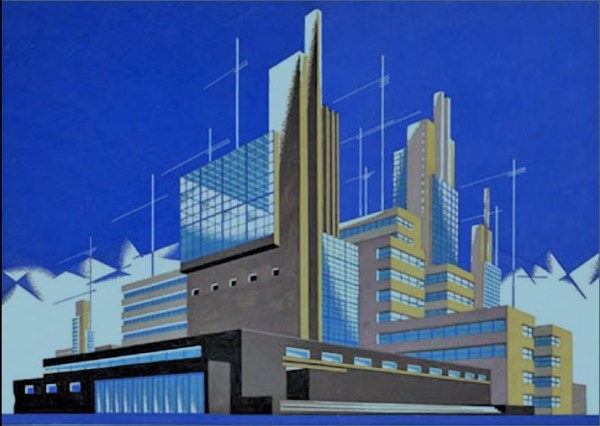
Chernikhov, Iakov. Arkhitekturnye Fantazii … Architectural Fictions. 101 Coloured Prints (Leningrad: Mezhdunarodnaya Kniga, 1933).
An ‘amazing compendium of one hundred and one coloured inventions which still excite the imagination today’ (S. Compton, Russian Avant-Garde Books 1917-1934, p.142), depicting factories, futurist cityscapes, electricity pylons and many abstract structures. The book was initially the property of the British architect Clough Williams-Ellis, creator of the wonderful Italianate village at Portmeirion in north Wales.
Two sketchbooks by Scottish writer R.M. Ballantyne
The first sketchbook, of approximately 85 leaves, includes original drawings (in pencil, ink and ink and wash), cartoons, sketches and preliminary ideas. Some of the images are highly finished and were intended for a subsequently abandoned book relating Ballantyne’s fishing trip to Norway. Others appeared in the published work Freaks on the Fells. On the first blank is Ballantyne’s presentation inscription to his sister-in-law, Christina Alice. The book later formed part of Eric Quayle’s celebrated collection and has his pencilled inscription on the verso of the front free endpaper. The second sketchbook, entitled ‘A Walk from London to Edinburgh’, consists of a series of seven autograph letters signed by Ballantyne to his sister-in-law Christina Alice (“Teenie”), describing the walk. These are mounted in an album with 19 highly accomplished watercolours showing himself en route. Ballantyne’s pencilled comments, one dated 1864, appear on the rear of each watercolour. Includes an autograph note by Eric Quayle.
Scrapbook compiled by the Edinburgh advocate E.M.G. Colquhoun
This manuscript scrapbook volume is dated, Edinburgh, 17 September 1838. The volume contains anecdotes, stories, poems, music, and pen and ink illustrations. There is much of Scottish interest. Part 1 contains 140 pages of historical documentary articles and curiosities compiled from travelling around Britain and Europe. Part 2 contains poems (many signed ‘Helen’), prose articles, and music (including ballads, waltzes and other songs). Throughout both parts there are fine pen and ink illustrations of antiquities, church architecture, historical objects, figures, etc. [Special Collections: Coll-1805]
Sir George Mackenzie of Rosehaugh, a genealogical manuscript
‘Planning your neighbourhood for home, for work, for play’
Nicolas Duval, Nouvelles heures: gravées au burin: dediées au Roy ([Paris])
Scott-Moncrieff Family Archive
January 2017
Sir George Mackenzie of Rosehaugh, a genealogical manuscript
‘A Collection of the Most Remarkable Accounts that Relate to the families of Scotland, Drawn from their owne charters… By Sir George Mackenzie of Roshaugh [sic.], His Majesties Advocat…’ Manuscript title and 264 manuscript leaves in a neat hand, mainly early 18th century. George Mackenzie of Rosehaugh, c.1636-1691, was a Scottish lawyer, Lord Advocate and essayist. He is known for being the minister responsible for Charles II’s policy of quelling the Scottish Covenanters, earning him the nickname ‘Bluidy Mackenzie’. However, he is also credited with founding the Advocates Library in Edinburgh.
A set of 20 pictorial display boards on ‘Planning your neighbourhood for home, for work, for play’ by Erno Goldfinger and Ursula Blackwell, [London: for Air Ministry Directorate of Educational Services, 1944]
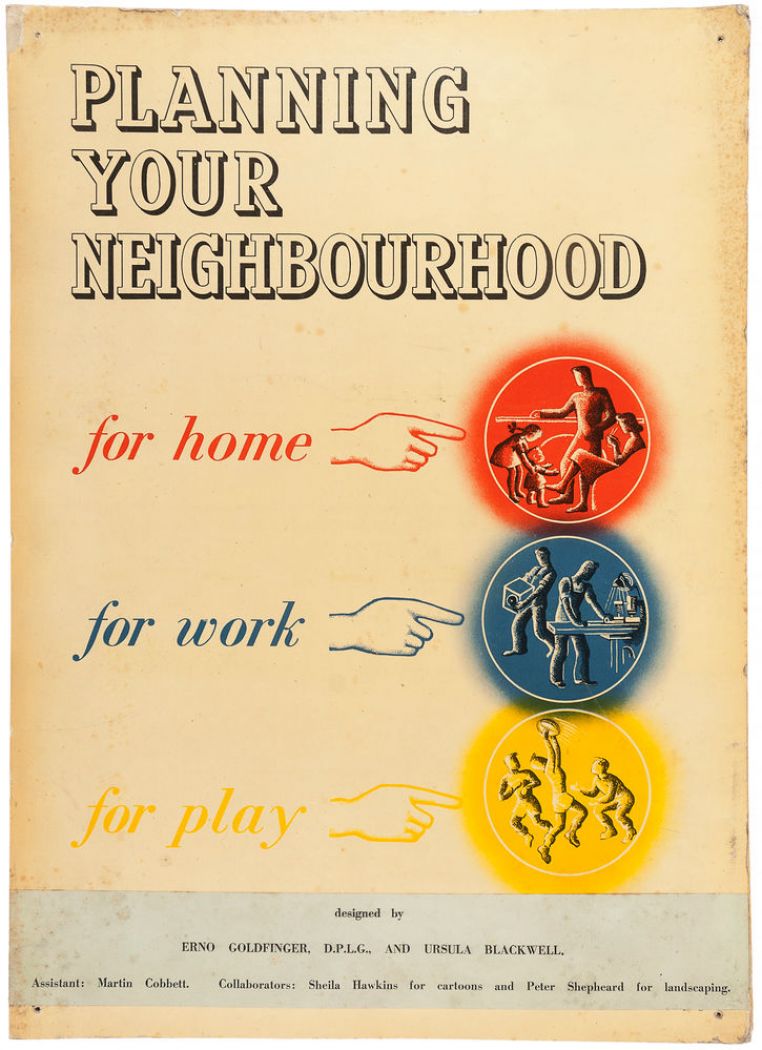
‘A fascinating, almost utopian, post-war scheme for rebuilding the blitzed London. Goldfinger was to become known for his brutalist high rise developments which ironically were to lead to distinctly non-utopian social disintergration.’ – Henry Sotheran Ltd.
Nicolas Duval,
Nouvelles Heures: Gravées au Burin:
Dediées au Roy ([Paris]:
… se vendent à Paris chez J. Mariette, [c.1695])
Engraved throughout by Louis Senault (1630-ca.1680) with fine calligraphic sectional title-pages, decorated initials, head- and tail-pieces, ornaments and frames.
This attractive all-engraved book of hours is dedicated to Louis XIV. The French writing master Duval and his brother, the calligrapher Senault, created a number of calligraphic books of hours dedicated to French aristocrats.
Scott-Moncrieff Family Archive
A large collection of letters, mostly from, to and between members of the Scottish Scott-Moncrieff family including Robert Scott-Moncrieff of Fossaway (1793-1869), and his wife Susan Pringle (1796-1840), and others of the family, mostly late 18th and early 19th century but also the manuscript ‘Reg[ist]rat Contract between Jean Moncrieff pra William Oliphant’, dated 1662. Also a quantity of manuscript letters, and legal documents relating to the same family, a small collection of Share Certificates, a collection of engraved plates, and other items. Altogether this archive is a wonderful snapshot of social history that, when conserved and listed, will merit close investigation.
2016
1. A Horological workbook (a section of Christophorus Clavius, Horologiorum noua descriptio, Romae: apud Aloysium Zanettum (1599) with later manuscript annotations).
2. A.G.B. Dufrenoy, Juvenile Games : For the Four Seasons (Edinburgh: Oliver & Boyd, 1819).
3. Eugenie Lacaille, Petits Mots pour Petits Bouches (Glasgow, c. 1895). A set of flash cards for teaching French devised by a Glasgow schoolteacher.
4. A fine illustrated manuscript volume of cookery and recipes compiled initially by Lady Nina Balfour of Balbirnie and then continued by Victoria Alexandrine Montagu Scott.
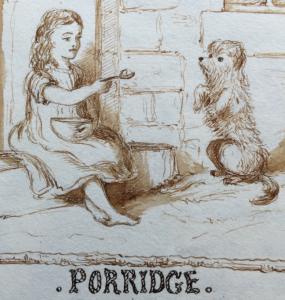
The volume was gifted by Balfour to Scott in about 1864-65, presumably in anticipation of her coming marriage, and was added to over some eighty years at Monteviot House (the Borders home of the Marquis of Lothian and the Kerr family).
Read more about this volume on the Archives blog.
2015
Two Additions to the W. H. Auden Collection
W. H. Auden, The Dance of Death (London : Faber and Faber, MCMXXXIII [1933]), First edition
A prompt copy heavily annotated (probably by the stage manager, John Moody) with pencil cast list for the second performance of 1 October 1935 on verso of dedication. Corrected text with around forty additional lines of verse by Auden not in any printed version, stage directions and extensive cuts throughout as well as reallocated and revised dialogue on every page. Formerly owned by Professor A.H. Campbell, Regius Professor of Public Law 1945-72. [Shelfmark: Auden.625]
W. H. Auden, September 1, 1939; foreword by Dana Gioia (West Chester, Pa.: Aralia Press, 2002)
A poem by W.H. Auden written at the start of WWII. One of 200 copies only, printed from Bembo types by Silke Anderson. Lawrence Yerkes executed the binding & Abigail Rorer made the engravings. [Shelfmark: Auden.768]
Three Guides to Barker Panoramas of Rome, Venice, and Elba by Henry Aston Barker (1774-1856)
- Description of the view of Venice: taken, and painted by Messrs. Barker and Burford, from the Piazza di S. Marco: with a representation of the carnival: now exhibiting in their Panorama, Strand. (London: Printed by Jas.-W. and Chas. Adlard, 25 Bartholomew-Close, West Smithfield, 1819)
- A short description of the Island of Elba: and town of Porto-Ferrajo: illustrative of the view now exhibiting in Henry Aston Barker’s Panorama, Leicester Square ([London: J. Adlard, printer], 1815)
- An explanation of the view of Rome: taken from the tower of the capitol: now exhibiting at H.A. Barker and J. Burford’s Panorama, near the New Church, in the Strand ([London: J. Adlard], 1817)
Shelfmarks: RB.P.1814-1816
A series of beautiful coloured folding plates, purchased from the Christian Aid Book Sale
May 2015
Whaling at Taijiura, series of scrolls : appendix to A History of Whaling at Taijiura, Kumano / The Committee for the Compilation of A History of Whaling at Taijiura; notes by Yasuo Hashiura. [1969] [Shelfmark: RB.FF.270-271]
Phoebe Anna Traquair’s Binding of the Psalms
The Psalms of David / with illustrations by John Franklin, engraved by W.J. Linton (London: Sampson Low, Son, and Co. Ludgate Hill, MDCCCLXII [1862])
Original binding by Phoebe Anna Traquair dated 1898 with her monogram on the upper cover and ‘Guild of Women Bookbinders’ label. Embossed goatskin depicting scenes from the Life of King David on the front and the Lion of Judah on the back cover. Silver clasps with leather strap. Gilt edges and vellum end papers. [Shelfmark: Bdg.s.40]
February 2015
Edinburgh Boundaries Extension and Tramways Bill, 1920: plans and photographs
This volume appears to have been compiled to illustrate the Tramways Bill of 1920 – surprisingly, no other surviving copies have been traced.
John Buchan, The Thirty-Nine Steps, 1915
We already had extensive correspondence by John Buchan in the Thomas Nelson Archive so it seemed appropriate to add the first edition of his most famous ‘shocker’, 100 years after its first publication.
Venice: A Poem in Latin by James Crichton (1560-1582), with an English version by Robert Crawford and eight photogravures by Norman McBeath
A fine private press publication, based on the Latin text of the Delitiae Poetarum Scotorum published in Amsterdam in 1637. It is one of 20 copies.
Collection of publishers’ bindings
2014
The Library accepted the gift from a member of the Friends of a collection of 170 volumes in decorated publishers’ bindings for the growing Bindings Collection.
Manuscript Medical Receipt and Commonplace Book. [Edinburgh]: 1817-49
May 2014
Clearly written by a woman, this fascinating two-volume manuscript gives detailed information about cures and courses of treatment gathered from a range of published and private sources. It shows the writer to be well informed about medical practice and current approaches in early 19th-century Scotland.
Dylan Thomas, The Laugharne Poems, Old Stile Press, 2003
The Library has been collecting the output of this private press for several years and, with funding from the Friends, recently acquired this finely-printed volume to mark 100 years since the poet’s birth. It contains engravings and drawings by the artist John Petts.
Important Archive of Poet and Folklorist Hamish Henderson (1919-2002)
August 2013
A private archive of more than 10,000 letters from almost 3400 correspondents, plus 136 notebooks and diaries, has been acquired from the Henderson family through the offices of the Hamish Henderson Archive Trust. Henderson was one of Scotland’s most prominent cultural figures. He was a leading architect of the Scottish folksong renaissance and co-founder of the University’s School of Scottish Studies. The archive includes several unpublished poems and letters to and from major cultural figures such as American folk singer Pete Seeger, poet Norman MacCaig, and Scottish makar Edwin Morgan. Also included are first-hand accounts of events unfolding in 1930s Germany, the Second World War (when Henderson served in the Intelligence Corps) and Apartheid era South Africa. More information is available here
Photographs of drawings by Willem van de velde the Younger (1633-1707)
May 2013
Dutch maritime painter Willem van de Velde the Younger was born in 1633 in Leiden, Netherlands. He was a son of Willem van de Velde the Elder, also a maritime painter. The younger van de Velde, was instructed by his father, and afterwards by Simon de Vlieger, and had achieved great celebrity in his art before he came to England in 1673. He had been engaged by Charles II, to aid the elder van de Velde in ‘taking and making draughts of Sea-fights’. His part of the work was to reproduce in colour the drawings of the elder van de Velde. Most of Van de Velde’s finest works represent views off the coast of Holland, with Dutch shipping. Willem van de Velde the Younger died on 6 April 1707 in London.
In 1859, John Frederick Campbell, 1st Earl Cawdor (1790-1860) acquired photographs of van de Velde drawings which were placed into an album. It contains photographic art reproduced on salted paper. Eight images are maritime in nature – vessels at sea – with waves and sails coloured in bluish/greyish tint. The photographer is unknown, but this is a relatively early and important attempt to use photography to document art. It relates well to our important collections of early photography such as the Hill & Adamson prints.
Music manuscripts, artwork and photographs relating to Helen Patuffa Hood
Helen Patuffa Kennedy-Fraser (born 1889) was the daughter of Marjory Kennedy-Fraser, singer, composer and arranger. She had married John Charles Fulton Hood – the Rev. Canon John Charles Fulton Hood – in 1920. Marjory Kennedy-Fraser and her daughter Patuffa used to present the mother’s collected songs in recitals which took them to New York, London and Berlin in the 1920s. This is an important addition to the collections by and about Marjory Kennedy-Fraser, with relevance to Scottish music and Highland culture.
Adam Smith’s set of Arabian Voyages
Niebuhr, Carsten. Voyage en Arabie & en d’autres Pays circonvoisins. Amsterdam, 1776, 1780.
With: Niebuhr, Carsten. Description de l’Arabie. Amsterdam, 1774
This is an exceptionally fine set of volumes formerly owned by Scottish economist Adam Smith. These four books record the discoveries made in Egypt and Arabia by the German explorer Carsten Niebuhr in the 18th century, with beautiful engraved plates giving vital information about the archaeology of the region. This was the first scientific exploration of the area, and Niebuhr’s accurate records were instrumental in leading to the decipherment of cuneiform inscriptions. The copies bear the book label of Adam Smith. This purchase fills a significant gap in the Adam Smith Collection, of which we hold the substantial surviving portion. These copies were listed in Hiroshi Mizuta’s definitive bibliography of Smith’s library, but until now their location was unknown. They give important insights into the wide interests of Scotland’s leading Enlightenment economist. They also complement our strong collections of Arabic manuscripts. The fine tree calf bindings have been recently repaired to a very high standard. The volumes will now rejoin the rest of Adam Smith’s library in the Centre for Research Collections’ Treasures Room.
Gordon Wright Collection
May 2012
Gordon Wright started publishing in 1969 whilst still employed as a camera operator in the printing trade and became the first in a new wave of Scottish general publishers. In 1968 he became involved in the illustration and design of the Nationalist magazine Catalyst and met the poet William Neill. When Neill won the Bardic Crown at the International Mod he approached Gordon to ask for advice on publishing his poetry. Gordon agreed to act as the publisher of a long poem in Scots called Scotland’s Castle, which sold out a 200 print run. This small success encouraged him to continue publishing and eventually he was able to leave the printing industry and run the fledgling publishing company full time.
From 1970 until 2001 Gordon published many well-known Scottish writers and was responsible for introducing Liz Lochhead when he published her first collection of poems, Memo for Spring in 1972. His biggest seller was his own A Guide to the Royal Mile which has sold 110,000 copies to date. Over the last three years Gordon has filed and catalogued paperwork, which accumulated during his publishing career.
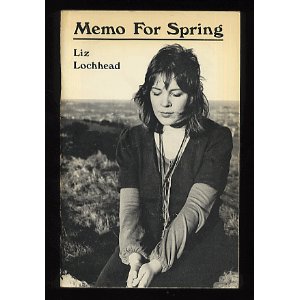
Some Highlights:
- A Political Speech by Hugh MacDiarmid. A corrected MS., a corrected set of page proofs and a one-page letter from Hugh MacDiarmid to Gordon Wright.
- A4 ring binder containing photographic material which, if added to MacDiarmid: An Illustrated Biography, would take the story up to MacDiarmid’s death.
- Transactions of the Scottish General Publishers Association 1974-1981.
- Page proofs for Four Points of a Saltire corrected by Sorley MacLean.
- Several MSS poems by Sorley MacLean submitted for Four Points of a Saltire.
- Page proofs of Memo for Spring corrected by Liz Lochhead.
- Hoop binder of 76 letters plus MSS, and Christmas cards from George Mackay Brown with some correspondence and photographs sent to GMB by Gordon Wright.
- A4 ring binder of correspondence between Flora Garry and Gordon Wright, publisher of her Collected Poems.
- Thirty-nine A4 photographs of John Bartholomew & Sons Ltd employees at work and at play. 1930s and 1960s. Also a letter from Gordon Wright to Alex Cairns, a nephew of Jim Lewis, former head draughtsman at John Bartholomew & Sons Ltd, asking him to take enclosed photographs to Jim, who was by then over 100 years old and in a nursing home, to see if he could identify several people.
- Three MSS poems by Duncan Glen presented to Gordon Wright in friendship.
Emile Baudement, Les Races Bovines. Paris, 1861-2
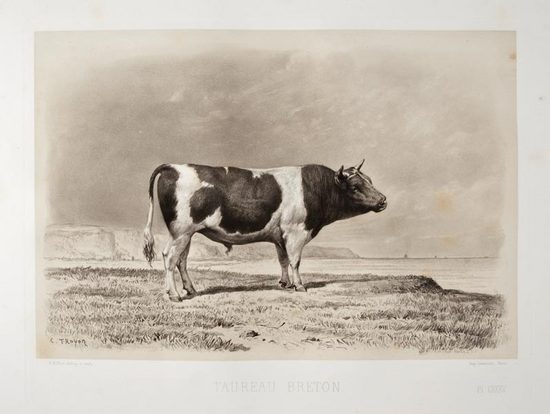
Contains 87 magnificent heliogravure plates of European cattle breeds with maps showing their distribution
This important two-volume set includes 87 magnificent heliogravure plates of European cattle breeds with maps showing their distribution. British breeds feature in their European context, and the work is noted for the accuracy of the depictions, making this a key source for Scottish and English cattle breeding in the 19th century. Other works from the same period tended to err on the side of artistic enhancements. This is a significant and beautiful addition to our strong holdings on animal breeding and agriculture.
Manuscript ledger recording semen collections from Scottish bulls, 1974-1978, with detailed information about the animals
This curious survival is a ledger of collections from privately owned bulls, mainly Ayrshire and Black and Whites, from the 1970s. It gives information about the animals and their owners, providing a unique insight into farm practices and breeding at the time. The bookseller notes, ‘I spent my working life in the AI industry and this list of bulls contains many I remember’.
Both items purchased in relation to the Towards Dolly Project:
‘Towards Dolly: Edinburgh, Roslin and the Birth of Modern Genetics’ catalogued and preserved records revealing the major role Edinburgh has played in the development of genetics on the world stage. The records include archival and printed material from the Roslin Institute (who famously cloned Dolly the Sheep in 1996), the University’s Institute of Animal Genetics and key geneticists such as Conrad Hal Waddington (1905-1975), Francis Albert Eley Crew (1886-1973) and zoologist James Cossar Ewart (1851-1933). The records, available online, are not only invaluable resources for the history of science and medicine, but also documents of the human stories behind the science. This project paves the way for expanding the genetics holdings in Special Collections and consolidating Edinburgh University Library’s status as an internationally renowned centre for research.
James Tait Black, A series of drawings in pen and ink of Quadrapeds, Birds, Fishes, Reptiles and Insects. Edinburgh, 1840-1841
September 2011
This is an extraordinary purchase of 24 pen and ink drawings of quadrupeds, birds, fish, reptiles and insects by James Tait Black, whose name is best known for the literature prize founded in his honour.
James Tait Black was born in 1826. He was a partner in the publishing house of A. & C. Black Ltd. The firm had been founded in 1807 by Adam and Charles Black in Edinburgh, and moved to the Soho district of London in 1889. In 1851, the firm bought the copyright of Walter Scott’s Waverley Novels for £27,000. Black was the husband of Mrs Janet Coutts Black who set up a literature prize in his name in 1919 after his death in 1911. Today, the company is now part of Bloomsbury Publishing Plc, who purchased it in 2000. They are publishers of a range of reference works.
There are two suites of work (1840 and 1841) with the same title but with a different set of 12 illustrations. The bindings of the two sets require conservation work. The illustrations from the 1840 suite, one of which is coloured, are: The elephant, The tiger, The gnu, The jackal, The bull, The mule, The cockatoo, The ostrich, The trout, The chub, The annulated snake, and The tiger swallowtail butterfly. The illustrations from the 1841 suite are: The sheep, The mastiff, The llama, The hog, The red deer, The snowy owl, The emu, The giant heron, The whale, The sawfish, The butterfly, and The great sea serpent.
Overall, the quality of the work is surprisingly high for such a young artist and the price at auction was very reasonable.
The Letters of Junius. London: Printed for J. Mundell & Co., Edinburgh, 1798
The pseudonymous Junius letters are one of the landmark political satires of the 18th century, and many attempts have been made to identify the author and other named characters in the work. This copy has been extensively annotated in a contemporary hand which gives valuable evidence – shedding wholly new light on this affair. The annotator seems to have been personally acquainted with some of the leading players, such as the booksellers John Almon and William Bingley. Another notable point is the identification of the pseudonymous ‘Modestus’ as Jeremiah Dyson (1722?-1776).
The letters, which first appeared in the Public Advertiser between 1769 and 1772, were a major factor in the fall of the Grafton administration. They continued to circulate in book form for years to come, having a major influence on the development of ideas about democracy, freedom of the press and government accountability. This edition was clearly published for the Scottish market and the owner may have been a Scot. Junius was a supporter of the anti-Scottish politician John Wilkes and the whole controversy is highly relevant to the debates about Scotland’s identity at the time.
College Riots in January 1838
October 2009
On 11 and 12 January 1838 a student snowball fight developed into a fight with workmen, which led to heavy-handed police intervention and ultimately the arrival of the 79th Regiment of Foot from the Castle to restore order. A number of students faced criminal charges and there was a strong feeling that they had been treated harshly. This volume is a compilation of printed accounts, newspaper cuttings, broadsides and satires on the riots, with extensive manuscript notes and a number of illustrations. It comes from the library of the antiquarian James Maidment.
Shelfmark: RB.S.278
Eleanor Anne Ormerod, ALS to G.C.Hughes, 2 August 1894
Shelfmark: E2009.36
and Eleanor Anne Ormerod, Manual of Injurious Insects. 2nd edn. London, 1890
Shelfmark: RB.S.319
Ormerod (1828-1901) was an entomologist who was the first woman to be awarded an honorary degree by the University of Edinburgh. She established herself as the leading authority on the subject and pioneered the teaching of economic entomology – leading to the recognition that insect activity had a major impact on agriculture and business. On 14 April 1900 she received an honorary LLD degree from the University, to whom she left a substantial sum of money. This letter was found inside the book formerly owned by G. C. Hughes; it joins 7 other letters already in Special Collections.
William Thomson, Baron Kelvin and Peter Guthrie Tait, Elementary Dynamics
bound with:
William Thomson, Elements of Dynamics. Edited, with permission, by John Ferguson, M.A., from notes of lectures…
and:
Peter Guthrie Tait, Historical sketch of the dynamical theory of heat. Not published. Edinburgh, Thomas Constable, 1867. (Not published). Oxford, Clarendon Press, 1870: Glasgow, George Richardson, 1863: (Not published). Edinburgh, Thomas Constable, 1867
Shelfmark: RB.S.363
This is an important addition to the Library’s collections illustrating the history of Scottish science and engineering. These are three truly rare printed but unpublished works by two leading figures in British physics; no copy is found in the National Library of Scotland. Thomson (Baron Kelvin of Largs) and Tait (Professor of Natural Philosophy in the University of Edinburgh) apparently issued versions of their texts in this form to meet student demand. The first work is interleaved and has pencil annotations; presumably it was actually used by a science student.
Frederick Sleigh Roberts, Lord Roberts of Kandahar (1832-1914), autograph letter signed 18 February 1896
May 2009
Shelfmark: E 2009.12
Field Marshal Roberts was one of the great military figures in the British Empire of the late Victorian period, who did heroic service in the Indian Mutiny and achieved victories in the imperial wars in Afghanistan and South Africa. At the height of his fame, he was asked to stand as the Liberal Unionist candidate for the Lord Rectorship of Edinburgh University. In this letter he declines the offer on the grounds that it would not be suitable for a high-ranking officer like him to engage in an electoral contest.
William Good, The Measurer’s and Tradesman’s Assistant.
Edinburgh: Printed for William Creech, 1788
Shelfmark: RB.S.221
This guide for Edinburgh tradesmen gives a valuable insight into trade practices and prices in the city in the 18th century. This is an excellent copy of the reissue of this important Edinburgh-related work, first published in 1775. It gives guidelines for measurements in Scotland and particularly in Edinburgh, including details of ‘ordinary prices of masons, wrights, glasiers, slaters, and painters work’. This copy was used by one George Murdoch in the early 19th century, who has included five pages of manuscript annotations.
Thomas Campbell, Autograph letter signed, 22 February 1834
Shelfmark: E 2009.18
The poet Thomas Campbell (1777-1844) achieved much social and academic recognition by 1834, and had been Rector of Glasgow University. However, it had not been known that he sought the chair of Rhetoric and Belles Lettres at Edinburgh University, which ambition is revealed in this letter to Francis Jeffrey, the Lord Advocate. Campbell writes that he is thinking about competing for this position, and asks for Jeffrey’s support. The establishment of the chair of Rhetoric and Belles Lettres at Edinburgh, created for Hugh Blair in 1762, is often seen as marking the start of the formal teaching of English Literature as an academic discipline at university level.
George Mackay Brown, The Girl from the Sea: A Play for Voices Llandogo: Old Stile Press, 2009
Shelfmark: RB.F.49
This unpublished drama by the Orkney poet George Mackay Brown was an important addition to our collections of his books and papers. The book was printed by the Old Stile Press in an edition of 195 copies, of which this is copy 24. It is illustrated with wood and lino cuts by the American artist Michael Onken. The paper is Vélin Arches, the type is Albertina and the binding is by The Fine Book Bindery, Wellingborough. It is an excellent example of modern book craftsmanship.
This publication featured in the Masterpieces I exhibition held in the Main Library’s newly refurbished exhibition room in 2009.
Charles Kinglsey to Archibald Geikie, 30 November 1868
March 2009
Shelfmark: E2009.09
Although best remembered as a children’s writer, Charles Kinglsey was also a popular preacher and clergyman and well-known supporter of Darwin, historian, and proponent of womens’ education. He also tried to make science popular and was interested in geology. This letter to Archibald Geikie (1835-1924) provides a detailed account of his own observations of the effect of ice on the geology of Deeside, Scotland. The letter is written at Eversley, November 30, 1868, and the purchase includes the autograph addressed envelope.
Robert Nugent Dunbar, The Nuptials of Barcelona, 2nd edition.
London: Sanuders and Otley, 1851
Shelfmark: RB.S.207
Robert Nugent Dunbar was a poet in the tradition of Thomas Moore, who lived many years in the West Indies and wrote verse about the islands and the Americas. This poem, in three cantos, is set in the city of Barcelona in what is now Venezuela. It is full of lush descriptions, sinister Catholic priests and smacks of the hearty patriotism of the British expatriate. This copy is the author’s own, with his bookplate naming his residence of Machermore Castle in Galloway. It is heavily marked up, apparently for a further edition which never appeared. Dunbar’s notes tone down the more strident anti-Catholic phrases; he also revises the page of critical notices which had come out in response to the first edition.
Sir Archibald Geikie, Photograph Album of the Geikie family, c. 1882-1887
January 2009
Shelfmark: E 2008.50
This is a fine photograph album with 38 albumen prints and one carbon print of portraits of the Geikie family. Dating is provided by a birthday card mounted on the front fly-leaf, dated 16 December 1882. There is a useful later index to the photographs, which identifies the sitters. The oldest two photos must have been taken before the death of both John Geikie and his wife Eleanor in 1864. There are several portraits from the 1870s; and the most recent dated photo is from 1887. The album appears from the index to have been numbered ‘V’ and probably is one of a group of albums. The absence of a photograph of James Murdoch Geikie, Archibald’s younger brother, may indicate that it was an album from his branch of the family. There is a portrait of Archibald Geikie, but a second portrait listed in the index has been removed.
Archibald Geikie (1835-1924) was one of the founders of modern geology. s a bored young banker he spent a holiday on the Isle of Arran, which resulted in his first work ‘Three Weeks in Arran by a Young Geologist’, an article in a Edinburgh newspaper. This introduced him to the scientific circles in Scotland and encouraged him to join Ramsay’s Geological Survey of Great Britain. In 1855 he became head of the Geological Survey, and wrote books on geology in his spare time. In 1871 he was appointed professor of geology at Edinburgh University and ten years later he succeeded Ramsay as head of the British Geological Survey, which made it necessary for the Geikie family to move to London.
James Ferguson, Astronomical Tables. London: Printed for the author, 1763
Shelfmark: RB.S.105
This is an important addition to our collection of printed and manuscript works by the Scottish scientist James Ferguson. This copy is particularly attractive as it has contemporary marginalia and three pages of notes from Rutherford’s lectures on hydrostatics, which suggests that a university student used it as a textbook and jotter. There is also a handsome folding plate on solar and lunar eclipses.
George Mackay Brown [and others]. A Northern Quartet. Thurso: John Humphries, 1967
Shelfmark: RB.P.21
The Library’s collections relating to George Mackay Brown, the Orkney poet, continue to grow; this pamphlet contains a scarce printing of his poem ‘Saint Magnus’.
James Robertson, Voyage of Intent: Sonnets and Essays from the Scottish Parliament. Edinburgh: Luath Press, 2005
Shelfmark: RB.P.22
James Robertson, the novelist and poet, reflected on the new Scottish Parliament in this publication written as part of his writer’s residency at the Parliament. Scotland has a fine tradition of sonnet sequences and this is a new addition to the genre. This copy is signed by the author and includes a typescript copy of Robertson’s poem ‘To Saint Andrew, in the year we got our Parliament (back).’
Patrick Geddes, 3 letters
Shelfmark: E2008.54
The enormous output of writer, social reformer and town planner Patrick Geddes (1854-1932) is reflected in the extensive collections of books and papers held by the Edinburgh University Library. These three letters from Geddes to R. E. Muirhead, chairman of the National Party of Scotland, shed new light on his political role. Two of the letters are Geddes’ autograph, the third is a typescript which forms a postscript to the second letter. All seem to date from 1928, when Geddes was living in his old age at Montpellier in France. As ever, Geddes is urging change and new perspectives.
[Medical School, University of Edinburgh]. Diploma issued by the Medical School at the University of Edinburgh to John Graham, 1741
Shelfmark: EUA CA6
John Rutherford, Andrew St. Clair, Andrew Plummer and John Innes all studied under Herman Boerhaave (1669-1738) at Leiden. In February 1725 they began teaching chemistry at a house near Edinburgh University physic garden. The following year they petitioned the town council to make them professors. Their appointments marked the beginning of the Medical School at the University of Edinburgh, the first institution in Britain to teach clinical medicine. Monro and Alston had also both studied under Boerhaave. Monro had been teaching anatomy at the University from 1720 and asked Alston to offer lectures in his areas of expertise, materia medica and botany.
John Graham was a student at the Medical School. This is the only known record of his attendance. It bears the signatures of three of the four founding professors and two other important physicians involved with the school from inception: Alexander Monro (1697-1767), surgeon and anatomist; John Rutherford (1695-1779), physician and chemist; Andrew St. Clair (1699-1760), physician and chemist; Charles Alston (1685-1760) physician and botanist and Andrew Plummer (1697-1756), physician and chemist.
Archived Purchases
Purchases May Sept 08 (pdf)
 The Friends of Edinburgh University Library