Events Archive
2025
23 January 2025:
Preview of Rooting: Ecology, Extraction and Environmental Emergencies in the University’s Art Collection, which ran in the Main Library from 24 January to 15 November 2025.
27 January 2025: Friends Committee Meeting
Farewell party in honour of Lady Caplan and other members of the Committee who have recently demitted office.
18 March 2025: Royal Correspondence in late 14th Century England: Exploring the ‘Royal Letter Book’
A presentation by Louise Gardiner, President of the Friends, in the CRC on the 6th Floor of the Main. Library. The Royal Letter Book, a late medieval manuscript that came to the University in 1878 as part of the Laing Collection, contains contemporary copies of 380 letters from the reigns of Edward III, Richard II and Henry IV of England. Louise has been working on this collection and during her talk she shared some of her discoveries and addressed questions about its creation and purpose.
19 May 2025: Friends Committee Meeting
4 June 2025: Visit to Library of Mistakes, hosted by Helen Williams, Librarian since its inception.
24 September 2025: Friends Committee Meeting
20 November 2025: AGM
Annual Report and Accounts for the year ended 31 July 2025
Followed by the launch of ‘Re:Connect, The Library and Collections Annual Report’- Celebrating a year of service and collecting
Each year, Library services change to meet new demands and developments, just as the University collections grow through donations, bequests, transfers and purchases. Library and Collections staff – expert information professionals, curators, librarians and archivists – work with a whole range of communities to ensure that the services and unique collections are grown responsibly and in a way that reflects current academic interests and sector best practice. Informing, updating and sharing Library and Collections achievements is the object of this report.
2024
1 October 2024: Esther Inglis (c.1570 – 1624): a Franco-Scottish Calligrapher of Jacobean Edinburgh
Dr Jamie Reid Baxter contextualised the life of this unique calligrapher, artist, miniaturist and author, who produced many intricate manuscripts across a forty-year career, within a Scottish historical and cultural landscape. Anna-Nadine Pike then introduced the manuscripts of Esther Inglis now held in Edinburgh University Library, thereby demonstrating Esther Inglis’ exceptional artistry.
30 September 2024: Friends Committee Meeting
7 September 2024: A Celebration of Lute Music
Acclaimed lutenist Dr Eric Thomas was joined by soprano Héloïse Bernard in a celebration of lute music. A concert inspired by the University of Edinburgh’s acquisition of an exceptional 1620 volume of lute manuscripts featured a selection of engaging and captivating works by John Dowland, Vincenzo and Michaelangelo Galilei, and René Mesangeau, including some pieces from the volume.
5 September 2024: Update on the Lyell Project
An update on the Lyell Project from our project interns.
10 June 2024: Visit to New College Library
This private visit to the newly refurbished Library was hosted by Dr Simon Burton, John Laing Senior Lecturer in Reformation History at the School of Divinity, and Christine Love-Rodgers, Academic Support Librarian for Divinity and the Edinburgh Futures Institute.
26 May 2024: Friends Committee Meeting
25 April 2024: Alexander Linklater: The Original Story of Hugh MacDiarmid
Alexander Linklater is a journalist and editor, whose work on Hugh MacDiarmid began in the early 1990s as a graduate student at the Department of Scottish Literature, University of Glasgow. His biography of Christopher Murray Grieve is forthcoming from William Collins in 2026. In this talk he discussed MacDiarmid’s Grieve and Graham grandparents, his relationship with his parents and his rivalry with his brother. It is in the upbringing of young Christy Grieve that the story of how he made himself up begins.
12 February 2024: Tom McEwan: Design Bookbinding
Tom talked about his craft and showcased some of his designer bindings. Tom was a contributor to the recent Gathering Leaves exhibition of the prizewinning and selected bindings from the Designer Bookbinders International Bookbinding Competition 2022. The Friends purchased both items contributed by Scottish entrants to the competition, which included Tom’s beautiful binding for Hugh MacDiarmid’s “A Drunk Man Looks at a Thistle”.
Monday, 22 January 2024: Friends Committee Meeting
2023
20 November 2023: AGM
AGM followed by Crusoe’s Books: Readers in the Empire of Print, 1800-1918, a talk by Professor Bill Bell, Professor of Bibliography at Cardiff University.
25 September 2023: Friends Committee Meeting
13 June 2023: Private visit to St Cecilia’s Hall and the Dunard Conservation Studio
19 April 2023
Dr Angela Bartie and Dr Eleanor Bell discussed the cultural legacy of and controversy at the 1962 International Writers Conference.
14 February 2023
In conversation with Bianca Packham and Lydia Wiernick, Peter Freshwater discussed Treasures Collected, the digital exhibition marking the 60th Anniversary of the Friends of Edinburgh University Library.
10 January 2023
A private viewing of Gathering Leaves, an exhibition of prize-winning and selected bindings from the Designer Bookbinders International Bookbinding and Elizabeth Soutar Bookbinding Competitions of 2022.
2022
15 November 2022: AGM
The AGM was held at St Cecilia’s Hall, followed by an illustrated talk by Bodleian Librarian and Director of the Bodleian’s Centre for the Study of the Book, on his book Burning the Books: A History of the Deliberate Destruction of Knowledge and world premier performance of a suite of songs celebrating books and libraries, written especially for the Friends of Edinburgh University Library to celebrate their 60th Anniversary, by Dr Tom Cunningham and Dr Alexander McCall Smith.
The minutes of the AGM are available here.
1 September 2022
‘George Mackay Brown and his papers’. Dr Linden Bicket, Lecturer in Literature and Religion, School of Divinity, was in conversation with Joyce, Lady Caplan, President of the Friends of EUL. Dr Bicket is particularly interested in twentieth-century Catholic fiction and poetry, modern Scottish literature and children’s literature. She has published widely on George Mackay Brown.
8 June 2022
Dr Kate Gibson, Centre for Research Collections Fellow, Institute for Advanced Studies in the Humanities at the University of Edinburgh, presented Adoption and Fostering in Eighteenth and Nineteenth Century Scotland.
5 April 2022
Rachel Hosker, Deputy Head of Special Collections and Archives Manager, gave a talk about the importance of student intern projects. She also introduced some of the interns who spoke about their specific projects and the collections involved.
22 February 2022
Dr David Munro, former Director of the Royal Scottish Geographic Society, presented “Centenary and Library Collections of William Speirs Bruce, Polar Explorer and Oceanographer”. Dr Munro gave insights into this fascinating polar explorer and the papers held in the Library’s collections pertaining to him.
2021
23 November 2021: AGM
Following the AGM, Tom Mole, Professor of English Literature & Book History and Principal of Van Mildert College, Durham University, presented an illustrated talk on his recent book, The Secret Life of Books.
14 September 2021
Mr Daryl Green, Head of Special Collections and Deputy Head of the Centre for Research Collections: “Powering through a Pandemic”.
15 June 2021
Dr Annabel Williams, Library Fellow, Institute for Advanced Studies in the Humanities (IASH): “The Arthur Koestler Archive”.
20 April 2021
Dr Margaret Mackay, Honorary Fellow in Celtic & Scottish Studies: The School of Scottish Studies and its Archives, celebrated the 70th anniversary of the School of Scottish Studies. A complementary piece by Dr Mackay appeared in the Spring 2021 edition of The Piper.
16 February 2021
“Harpsichord Detectives: Exposing Myths, Hearsay and Fraud in the University of Edinburgh’s Musical Instrument Collections” – a talk by Dr Jenny Nex, Curator, Musical Instrument Collections, University of Edinburgh.
2020
3 November 2020: AGM
Annual General Meeting followed by a talk by David McClay, Philanthropy Manager, Library & University Collections, on the “Charles Lyell Archive: Creating Charles Lyell’s World Online”.
David McClay, with colleagues, presented an illustrated update on exciting recent activities, projects and plans. The success of saving Lyell’s notebooks in 2019 has been extended with significant additional donations and purchases this year, some supported by the Friends. This enlarged collection is now the focus of an extensive Lyell access and engagement project: “Creating Charles Lyell’s World Online”. There was also be an update on a new initiative to provide professional student placements with the collections.
For the Friends of EUL 2019/20 Financial Report and Accounts please click here.
15 September 2020
“Working with the Halliwell-Phillips Collection at the Centre for Research Collections” – a talk by Dr Tom Harrison (IASH Fellow and Newcastle University) .
In the 1860s the University of Edinburgh loaned its copy of the very rare second quarto of Shakespeare’s Titus Andronicus to James Orchard Halliwell-Phillipps, a Shakespeare scholar, so that he might make a facsimile.

As a mark of his gratitude he bequeathed a large collection of books and manuscripts to Edinburgh University Library in 1872. A larger collection of Halliwell-Phillipps’ working books are housed at the Folger Shakespeare Library, but the Edinburgh items have received considerably less attention to date. The working books are valuable as they give an insight into the research practices and developing ideas of one of the nineteenth century’s most eminent Shakespearean antiquarians; perhaps more significantly, they contain hundreds of clippings from pre-1800 texts (many of them Shakespearean) that have hitherto been unexplored or fully documented. Dr Harrison spoke about his research which seeks to identify and, wherever possible, establish the provenance of the pre-1800 textual fragments.
4 March 2020: Interns Showcase
Working as a Student Intern with Library Research Collections at the Centre for Research Collections. Led by Rachel Hosker, Archives Manager and Deputy Head of Special Collections, with Francesca Vavotici and Emma Trivett.
“Taking on volunteers and interns is a chance for experienced people with developed careers to pass on the knowledge and experience that university studies alone cannot give” – Fiona, a conservation volunteer at the Library.
Volunteers and Interns are an important part of the work of the Centre for Research Collections (CRC) and contribute a great deal towards the overall success of the CRC, working on a range of projects. This event was an opportunity to hear first-hand from students who were undertaking internships, with presentations from Francesca Vavotici, who explored stories of Equality & Diversity, and Emma Trivett, who used her knowledge to enhance Mediaeval Manuscript catalogues. Rachel Hosker introduced the students and explained why such internships and others like them are so important for the work at CRC.
2019
12 November 2019: AGM
“The Thomas Nelson Archive”- a talk by Rachel Hosker, Archives Manager and Deputy Head of Special Collections
-
- FoEUL AGM Agenda – 2019 [docx]
- Annual Report 2019 [pdf]
- FOEUL_Accounts_2019 [pdf]
Following the AGM, Rachel Hosker discussed the Thomas Nelson archive collection in the Library. Beginning as a small bookselling business, the British publishing firm of Nelson is still a prominent name. The business grew on the formula of reprinting standard authors at low prices. Later production focused on story books, religious books and books of travel and adventure by popular authors, particularly intended for young readers. John Buchan (1875-1940) was a literary adviser and the firm also published his work. Other authors include Bagehot, Belloc, G.K. Chesterton, Erskine Childers, H.J. Newbolt, Mark Twain and H.G. Wells.
The Thomas Nelson archive holds business records of the firm, covering the period 1861-1960 and dealing with every aspect of the firm’s activity. However, the bulk of the archive is correspondence, including letters about submitted manuscripts, illustrations, translations, terms of contract and royalties. The archive also includes correspondence files for T.C. & E.C. Jack, another publishing firm absorbed by Nelson. In total there is some 80 linear metres of archival material in 900 boxes or volumes, including around a million individual documents.
3 September 2019
Visit to the University Collections Facility, South Gyle, led by Dr Joe Marshall.
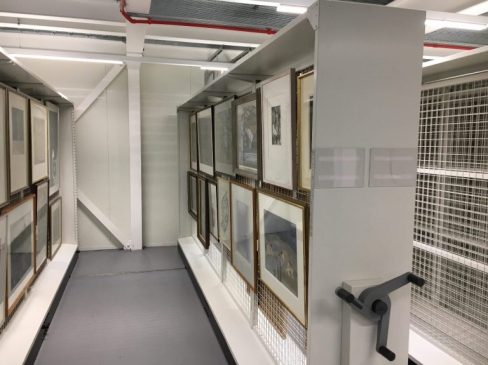
The University Collections Facility (UCF) is the University’s off-campus storage facility in South Gyle. The building has been specially customised to provide additional storage for the University’s extensive library, cultural and heritage collections, and houses a wide range of general and research collections.
The building provides separate controlled environment storage areas so that temperature, levels of humidity and lighting can all be adjusted to protect and conserve the items being stored. Such items include books, journals, archives, manuscripts, letters, heritage collections, historic musical instruments, artworks, and museum objects.
Covering everything from rare books to contemporary art, the unique combination of collections held by the University is an invaluable resource for teaching, research and engagement. The UCF is a key building for the management of these collections, and although it is not generally open to visitors, it allows us to supply items to users across the University.
The visit was led by Dr Joe Marshall, Head of Special Collections and the Centre for Research Collections (CRC). Joe oversaw the recent refurbishment of the University Collections Facility and has a profound knowledge of the collections held at the Facility.
_____________________________________________________
25 July 2019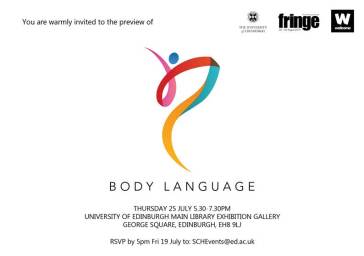
Delve into the archives of Dunfermline College of Physical Education, Scottish Gymnastics, and the influential dance pioneer Margaret Morris (1891-1980), and discover Scotland’s significant contributions to movement and dance.
Open to the public 26 July – 26 October 2019.
11 June 2019: A Guided Visit to the New Law Library, Old College
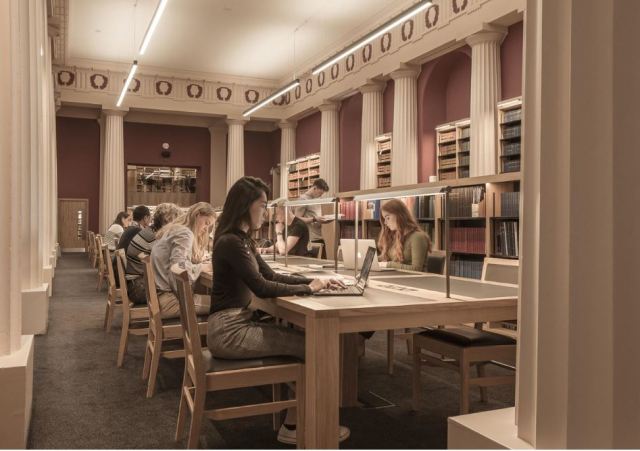
After several years of development, begun in 2014, the Law Library reopened in a new location in January 2019. The new Law Library features the spectacular Senate Room with double height flooring, a study mezzanine level, quiet study space and computer desks. Since it re-opened the Law Library has been buzzing with students.
The Library holds the bulk of the University’s law collections, specialising in Scots, UK, international and Commonwealth law. It is also a designated European Documentation Centre.
The visit was led by Liz Stevenson, Academic Support Librarian, Law Library.
9 April 2019: Victorian Publishers’ Bindings
A talk by Peter Freshwater (Honorary Secretary of the Friends of EUL): “Victorian Publishers’ Bindings: Collecting, Cataloguing and Curating”
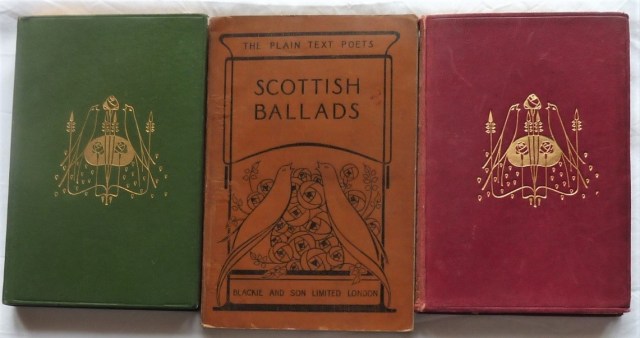
Publishers’ – or edition – binding was introduced to the book trade in the early 1820s and was originally done by hand. Technology soon developed so that books were bound as well as printed by machine, and the bindings could be designed and elaborately decorated to make them more marketable, and the practice continued until rising costs saw the designed cover largely replaced by dustjackets in the early 1900s. Publishers’ bindings are essential elements in the study of book history, economic and social history, and the history of applied arts and design. The creation and maintenance of a collection of publishers’ bindings has implications for traditional library practices of curating, cataloguing and access in order to facilitate its study.
Peter Freshwater, some time Deputy University Librarian, has collected publishers’ bindings for over 50 years, having fallen in love with them as a postgraduate librarianship student at UCL where his bibliography tutor was Howard Nixon, Deputy Keeper and Head of Rare Book Collections in the BM Library, and the then British doyen of bookbinding history. Some of Peter’s collection have become the Freshwater Collection in EUL, part of the Library’s growing Bindings Collection.
26 February 2019
A Talk by Dr Paul Barnaby (Acquisition and Scottish Literary Collections Curator): “John Buchan and the First World War: As Seen through the Thomas Nelson Archive”.
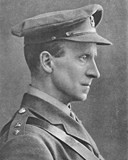
Even by his own extraordinary standards, John Buchan was prodigiously active during the First World War. He authored an ongoing History of the War (published in 24 parts between 1915 and 1919), edited the War Monthly magazine, and worked as Western Front correspondent for The Times and Daily News. His journalistic and propaganda work eventually led to a commission in the Intelligence Corps (1916) and the Directorship of the newly founded Department of information (1917). Meanwhile, he continued to work as partner and literary adviser for Thomas Nelson Publishers and somehow found time to write four of his most popular novels, including The Thirty-Nine Steps and Greenmantle. This talk will draw on the Archive of Thomas Nelson Publishers, held by Edinburgh University Library, to illustrate his multi-faceted war work.
Dr Paul Barnaby is Acquisition and Scottish Literary Collections Curator at the University. Additionally, he maintains the Walter Scott Digital Archive. Dr Barnaby also worked as main researcher for the Bibliography of Scottish Literature in Translation (BOSLIT) at the National Library of Scotland, and as Post-Doctoral Research Fellow for the Reception of British and Irish Authors in Europe project at the University of London.
Private celebration to mark the acquisition of Ben Jonson’s Workes
Friends of Edinburgh University Library joined staff in the Centre for Research Collections at a private celebration of the acquisition – with your help – of the unique annotated copy of Ben Jonson’s Workes (1640). Through the generous response of Friends to the Jonson Appeal, this book has been added to University special collections, joining the existing strong holdings of Shakespeare and early English drama.
2018
14 November 2018: AGM followed by a talk on The Lorimer Papers by Dr Louise Boreham
The architect Robert Stodart Lorimer (1864-1929) was raised in a Georgian townhouse in Edinburgh’s New Town and was educated at Edinburgh Academy and Edinburgh University. In 1885 he started his career in architecture with the practice of Sir Robert Rowan Anderson in Edinburgh.
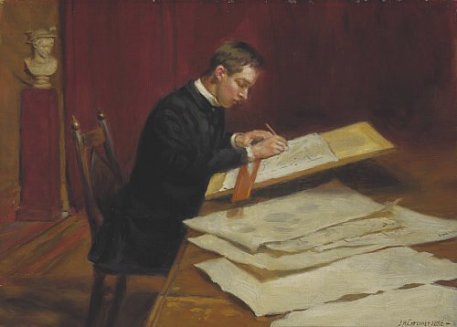
John Henry Lorimer [Public domain], via Wikimedia Commons
Lorimer became interested in the Arts and Crafts Movement and in Scottish Vernacular architecture. These interests led Lorimer to undertake the Thistle Chapel in the High Kirk of St. Giles, Edinburgh, in 1909. He also remodelled suburban villas and built cottages in various parts of the city. Another major project was the Scottish National War Memorial within Edinburgh Castle. He also created similar memorials in Italy, Egypt and in Greece. Towards the end of his career he restored Paisley Abbey. Dr Louise Boreham is a retired college head of department who helped list the Lorimer Papers archive held in Special Collections. She has written numerous articles, contributed to books, radio and TV programmes and given many talks to a variety of interest groups.
24 October 2018
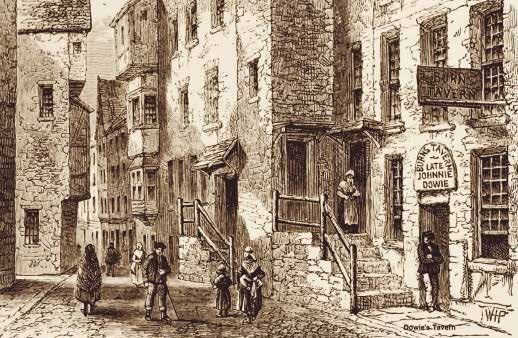 Taverns in Edinburgh in the eighteenth century performed a similar function to that of coffee houses in England: places for informal political debate, exchange of news, drinking, and informal music making. This looked at this cultural environment, with an emphasis on the musical gatherings in the Cross Keys Tavern, which led to the formation of the Edinburgh Musical Society. Dr Elizabeth Ford is the Daiches-Manning Memorial Fellow in 18th-century Scottish Studies at IASH, and one of the research assistants for the Royal Society of Edinburgh-funded Eighteenth-century Arts Education Research Network at the University of Glasgow. Dr Ford’s Ph.D. thesis on the flute in eighteenth-century Scotland won the National Flute Association’s Research Award.
Visit to McEwan Hall and Anatomical Museum – two summer outings in one!
5 June 2018
The iconic McEwan Hall was built between 1888 and 1897 using the largest single private donation in the University’s history, from the brewer William McEwan. The Hall was designed by Sir Rowand Anderson, with lavish interiors by William Patin. Scene of graduations, exams and other unforgettable events for more than a century, the Hall has undergone exciting redevelopment work, finally reopening to visitors last year. This visit to the McEwan Hall was be self-led.
The Anatomical Museum has a collection of 12,000 objects and specimens that tell the story of 300 years of anatomical teaching at the University of Edinburgh. About one third of the museum’s collection is related to pathology, anatomy and zoology. This includes models, skeletal remains, dried and fluid preserved specimens. The rest of the collections include phrenology, pharmacology, ethnography, forensics and anatomical and other artworks. The museum displays a number of unique objects in-cluding the skull of George Buchanan (tutor to James VI), a dissected body with the lymphatic system injected with mercury (1788) and the skeleton of notorious murderer William Burke (1829). The visit to the Anatomical Museum wasled by Malcolm MacCallum, Anatomical Museum Curator.
24 April 2018: “Re-exploring the Laing Collection”- a talk by Rachel Hosker, Deputy Head of Special Collections
The Laing Collection of manuscripts is one of the most fascinating and rich collections the University of Edinburgh has. Compiled over the lifetime of David Laing (1793 – 1878), the antiquarian and historian, the collection’s diversity in chronology, subject matter and people make it complex to explore for users, as well as a challenge for the team at the Centre for Research Collections.
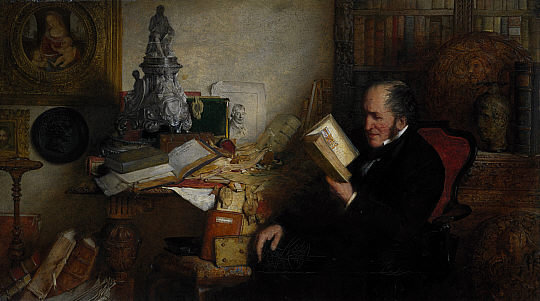
David Laing by Sir William Fettes Douglas. Scottish National Gallery [Public domain], via Wikimedia Commons
Rachel Hosker explored the collection from this perspective and introduced the projects the CRC are undertaking to tackle them and make it more widely available to a greater audience. Highlights included amazing finds, further understanding of the collection from a recent exploration, to student projects on medieval manuscripts, automatic handwriting recognition and description, crowdsourcing conservation and knowledgeable volunteers working on sections such as charters. Rachel Hosker is the Archives Manager and Deputy Head of Special Collections with overall responsibility for the Archives Team, from University archives to Scottish Studies and externally funded projects. She has a love of Scottish Palaeography as well as making collections available digitally for reuse and creative works.
 8 December 2017 – 24 February 2018
Exhibition: Highlands to Hindustan: Indian Art from University of Edinburgh Collections

Highlands to Hindustan: Indian Art from University of Edinburgh Collections
28 July – 4 November 2017
Marking the UK-India year of culture, this is the first ever exhibition of University collections devoted to Indian art. Featuring over 50 objects, the exhibition reveaed their rich artistic legacy, whilst also uncovering their journey to the University of Edinburgh. Produced over two millennia, the artworks in the exhibition showcased the Indian subcontinent’s rich and diverse cultural heritage.
Visit to St Cecilia’s Concert Room and Music Museum, Niddry Street, Edinburgh
25 September 2017
Friends of Edinburgh University Library members attended a private visit to the recently refurbished St Cecilia’s Concert Room and Music Museum.
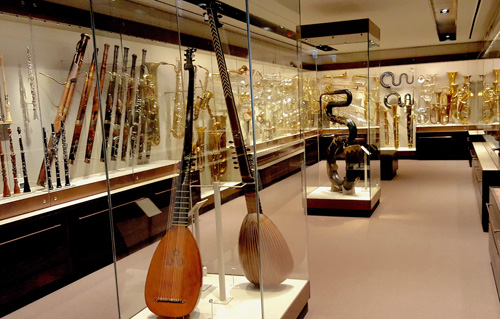
After ten years of development, five years of fund-raising and nearly three years of restoration, St Cecilia’s reopened on 11 May 2017 this year. Originally opened in 1763, St Cecilia’s Hall is the oldest purpose-built concert hall in Scotland. It is the only place in the world where it is possible to hear eighteenth century music in an eighteenth century concert hall played on eighteenth century instruments. Owned by the University of Edinburgh, it contains one of the world’s most important collections of historic musical instruments, many of which remain playable in a concert setting.
The new St Cecilia’s Hall museum brings this collection under one roof, allowing the story of the collection as a whole to be presented and enabling visitors to engage with the objects and their stories. The elegant oval concert hall on the first floor of the building has been in continuous use since it opened in the eighteenth century and remains at the heart of the Georgian building, but is now complemented by four galleries on both ground and first floor.
The visit was led by Sarah Deters, of the Museum staff. We also had the privilege of hearing some music on the instruments on display.
Highlands to Hindustan Exhibition Preview – Indian Art from University of Edinburgh Collections
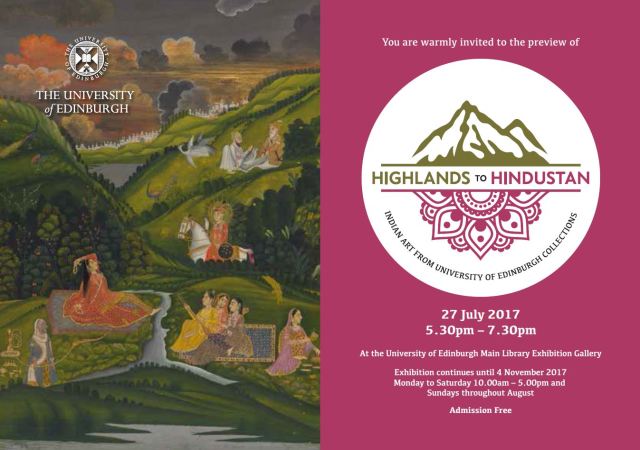
Friends attended the evening preview of the Centre for Research Collections Edinburgh Festival Fringe exhibition: ‘Highlands to Hindustan: Indian Art from University of Edinburgh Collections’.
Marking the UK-India year of culture, this is the first ever exhibition of University collections devoted to Indian art. Featuring 50 objects, the exhibition reveals their rich artistic legacy, whilst also uncovering their journey to the University of Edinburgh. Produced over two millennia, the artworks in the exhibition showcase the Indian subcontinent’s rich and diverse cultural heritage.
1 June 2017
Behind the scenes at the National Museums: Visit to the National Museums Collection Centre, Granton
The National Museums Collection Centre at Granton, Edinburgh, provides a home for many of the objects and specimens that are not currently on display in the National museums. In fact, the collections are so extensive, that only a small proportion can ever be shown at once.
From butterflies to dinosaur bones, motorbikes to traction engines – the material gathered at the Centre is as diverse as it is vast. The stored material enable staff of the Museums to refresh exhibitions and study subjects in depth. The Collection Centre has facilities for undertaking research on collections, as well as conservation and scientific research laboratories.
In conjunction with the redevelopment of the National Museum of Scotland two new buildings were built at Granton, providing state-of-the-art conservation laboratories and enhanced storage for the national collections. This was our chance to see behind the scenes at these purpose-built adjuncts to the Museum collections.
For more information on the facility, including location, see: http://nms.ac.uk/collections-research/research-facilities/national-museums-collection-centre/
________________________________________________
15 February 2017
“The Cleghorn Collection” – a talk by Dr Henry Noltie, Royal Botanic Garden Edinburgh
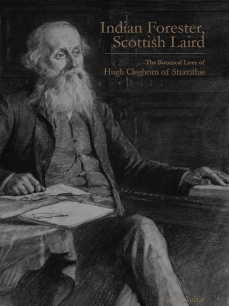
Dr Noltie spoke about the botanical and forestry books and paintings in Edinburgh University Library’s Hugh Cleghorn Collection, and examples will be on display. The fascinating story of Cleghorn (1820-1895) and his collections has been pieced together over the last 20 years, from widely scattered sources in both Britain and India. The findings were recently published in two books by Dr Noltie: a biography of Cleghorn – Indian Forester, Scottish Laird – and a book on the outstanding drawings that Cleghorn commissioned in India: The Cleghorn Collection. These were also on display.
16 November 2016
Annual General Meeting and Talk on the Steinbeck Collection
- Trustees’ Report and Accounts for the year ended 31 July 2016: foeul2016 [pdf]
Following the AGM Dr Keith Hughes, lecturer in the School of Literatures, Languages and Cultures, University of Edinburgh, introduced Steinbeck’s life and work, making reference to the relevant special collections in our Library with some examples of items held.
25 October 2016
Geographies of Travel and of Publication: Mungo Park, the Niger, and Late Enlightenment Exploration– a talk by Professor Charles W J Withers FBA FRSE
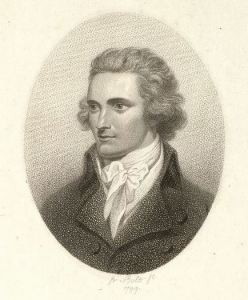
This illustrated talk examined the exploration of the River Niger by the Scottish explorer Mungo Park (1771-1806). Attention will be paid to his two ‘expeditions’ to the Niger and the two books arising from them, the first, Travels in the Interior Districts of Africa, published in 1799, the second, published posthumously in 1815. Understanding Park’s ‘authorship’ requires that we recognise the context to his works and words: his own admission of incompleteness, the authority of others, and competing theories over the Niger.
Professor Charles W J Withers, Ogilvie Professor of Geography at the University of Edinburgh, is renowned for his work in the historical geography of science; geography, travel and exploration; geography and the Enlightenment; and the histories of cartography. In 2015, he was appointed Geographer Royal for Scotland.
Professor Withers has kindly agreed to repeat this talk, since many Friends couldn’t attend the presentation at the National Library of Scotland earlier this year. _____________________________________
Exhibition: ‘Godfrey Thomson: The man who tested Scotland’s IQ’
The exhibition told the story of Sir Godfrey Thomson (1881–1955), Professor of Education at the University of Edinburgh from 1925 to 1951. In his day, Thomson was internationally famous. He was an important theorist of intelligence, a massive-scale producer of IQ tests, and a pioneer in statistical methods. He oversaw Scotland’s ground-breaking Mental Surveys, collecting data on the intelligence of almost every 11 year old child in Scotland in 1932, and again in 1947.
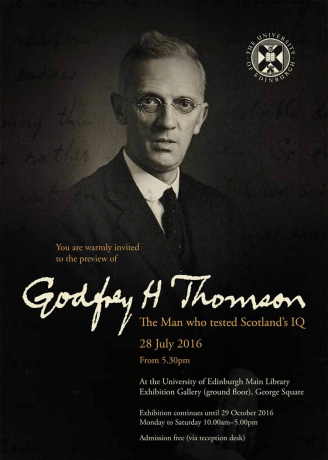
In recent years, Thomson had all but disappeared from memory, with few documents remaining of his life and work. However, this all changed in 2008 when Thomson’s personal papers were rescued from his former home prior to its demolition. In 2012 the University received funding from the Wellcome Trust to undertake the cataloguing and conservation of this unique archival collection. Highlights from the collection will be on show, complemented by the ledgers of both Scottish Mental Surveys, on loan from the University of Glasgow.
Friends are always warmly invited to Library exhibition openings, which are interesting and convivial. Please do come along and join in if you can.
________________________________
Summer visit to Queen Margaret University Library, Edinburgh
Date: Friday 10 June 2016
Time: Those who have a confirmed place (see below) should meet at the ground floor Reception at 14:00.
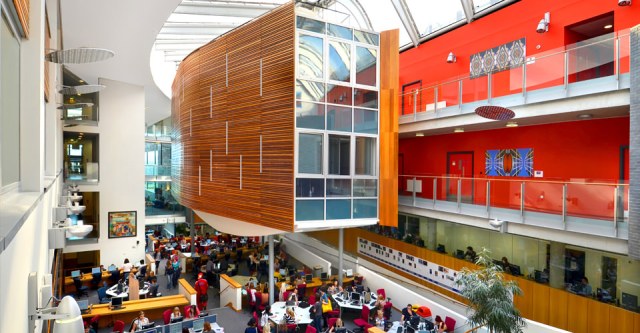
Friends will see a display of fascinating special collections objects relating to the history of the University from its inception in 1875, and there will be a tour of the Library building. Refreshments will be provided.
______________________________________
Exhibition: ‘Brown Paper and Imagination: Revealing the Edinburgh College of Art Revel’
Venue: Exhibition Gallery, ground floor, University of Edinburgh Main Library
Opening times: Runs until 2 July 2016 and is open 10-5pm Monday – Saturday. Admission is free.
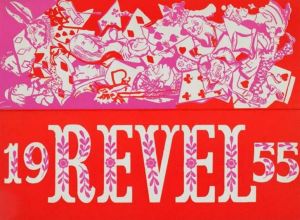
This exhibition celebrates the story of the Edinburgh College of Art ‘Revel’, a yearly creative extravaganza that has been at the heart of ECA since 1909. Historic films and archives will accompany a narrative from student handbooks and newspapers, guiding you through the creation of the event to the night of the party itself. Witness the explosion of colour, fun and humour that makes the Revel!
______________________________________________
28 April 2016: Profesor Charles Withers, ‘Geographies of Travel and of Publication: Mungo Park, the Niger, and Late Enlightenment Exploration’
A talk by Professor Charles Withers, Ogilvie Chair of Geography, University of Edinburgh, and Geographer Royal for Scotland.
This illustrated talk examined the exploration of the River Niger by the Scottish explorer Mungo Park (1771-1806). Attention was paid to his two ‘expeditions’ to the Niger and the two books arising from them, the first, Travels in the Interior Districts of Africa, published in 1799, and the second, published posthumously in 1815.
Understanding Park’s ‘authorship’ requires that we recognise the context to his works and words: his own admission of incompleteness, the authority of others, and competing theories over the Niger.
31 March 2016: Exhibition Preview: ‘Brown Paper and Imagination: Revealing the Edinburgh College of Art Revel’
Friends attended the evening preview of the Library’s Spring exhibition: ‘Brown Paper and Imagination: Revealing the Edinburgh College of Art Revel’.
This exhibition celebrated the story of the Edinburgh College of Art ‘Revel’, a yearly creative extravaganza that has been at the heart of ECA since 1909. Historic films and archives accompanied a narrative from student handbooks and newspapers, guiding you through the creation of the event to the night of the party itself. Witness the explosion of colour, fun and humour that makes the Revel!
1 March 2016: Dr Elizabeth Cumming, “From Edinburgh to Paris: the Book Art of Phoebe Anna Traquair”
Phoebe Anna Traquair HRSA (1852-1936) was Edinburgh’s leading artist of the Arts & Crafts Movement. Her major decorative murals in Edinburgh include the Song School at St Mary’s Cathedral and the Mansfield Place Church, now the Mansfield Traquair Centre. However, from an early age she was equally dedicated to book art, and produced some of the finest British late nineteenth-century illuminated manuscripts and embossed book covers. Produced in Edinburgh’s Dean Studio, such work was showcased not only in Britain but in international exhibitions across the world.
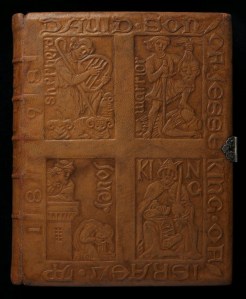
In this talk Dr Elizabeth Cumming, an honorary Fellow in the History of Art at the University, introduced Traquair’s choice of texts from the Bible to Blake, Tennyson, Rossetti and the Brownings and illustrate how these were interpreted into highly imaginative and, in the case of manuscripts, richly coloured images. Among the books discussed was the important 1898 binding of The Psalms of David, recently acquired by the University with the generous assistance of the Friends and the London branch of the Graduates Association, and her 1897 ‘Creation’ manuscript in the same collection.
EXHIBITION: Visual Dissection – The Art of Anatomy
4 December 2015 to 5 March 2016
This exhibition gave a rare opportunity to view unique artifacts that had never been on public display.
![0067231c[1]](https://friendsofeul.co.uk/wp-content/uploads/2012/07/0067231c1.jpg?w=564&h=482)
This exhibition of human and animal anatomy charts four centuries of medical endeavour. It includes woodcuts and engravings from the 17th century, Victorian wax and papier mâché models and exhibits that use the digital technologies of today. Also included in the display is a wax moulding of two hands taken from a patient at the Royal Infirmary of Edinburgh, a cast of the internal anatomy of the human head and a set of models showing the development of a rabbit’s heart. The world’s largest three dimensional anatomical hologram and a colourful knitted representation of the human circulatory system are also on show.
3 December 2015: Exhibition Reception
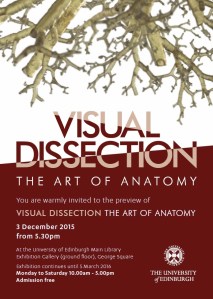
Visitors had an extremely rare opportunity to see a range of collections from the University’s Anatomical Museum, some of which had never been on display to the public before. The exhibition will tell the story of how anatomical representation of the body has changed over the years, taking you on a journey from the woodcuts and engravings of the 17th and 18th centuries, to the wax and papier mâché models of the 19th and 20th centuries, and then on to the digital technologies of today.
18 November 2015: AGM talk “America in Edinburgh: The Frontiers of Edinburgh are Global”
After the AGM Owen Dudley Edwards, former Reader in Commonwealth and American History, University of Edinburgh, spoke on the American collections held in the Library. This presentation added a further dimension to the article “Americana in EUL Special Collections” which appeared in The Piper, no. 44 (Autumn 2015).
20 October 2015: The Oldest Chinese Book and the East Asian Collections
A talk by Dr Shenxiao Tong, East Asian Studies Librarian
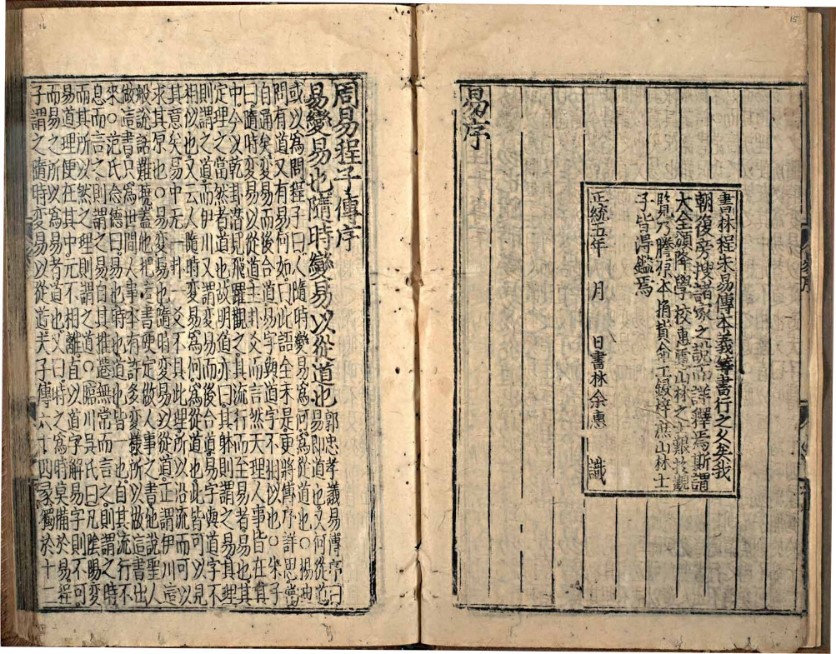
Chinese books began to be collected by European libraries through Jesuits and merchants from the late sixteenth century. The earliest Chinese accession in the University Library collections, acquired through donation in 1628, was a volume containing parts of a book called Zhouyi zhuanyi Daquan, published in China in 1440. It turns out to be the earliest printed book in the collections, and probably also represents an even earlier Chinese publication than any of those collected elsewhere in university libraries in the UK. For a long time the book lay in obscurity until its ‘rediscovery’ in a Library exhibition catalogue in the 1960s, at the time when the University’s Chinese Department was first established.
This talk aims to supply some additional information to Dr Stephen McDowall’s fascinating paper on this iconic item, and also to expand the topic to introduce the history of the Chinese collection in general, the only such collection in Scotland.
30 July 2015: Exhibition Preview: ‘Towards Dolly: A Century of Animal Genetics in Edinburgh’
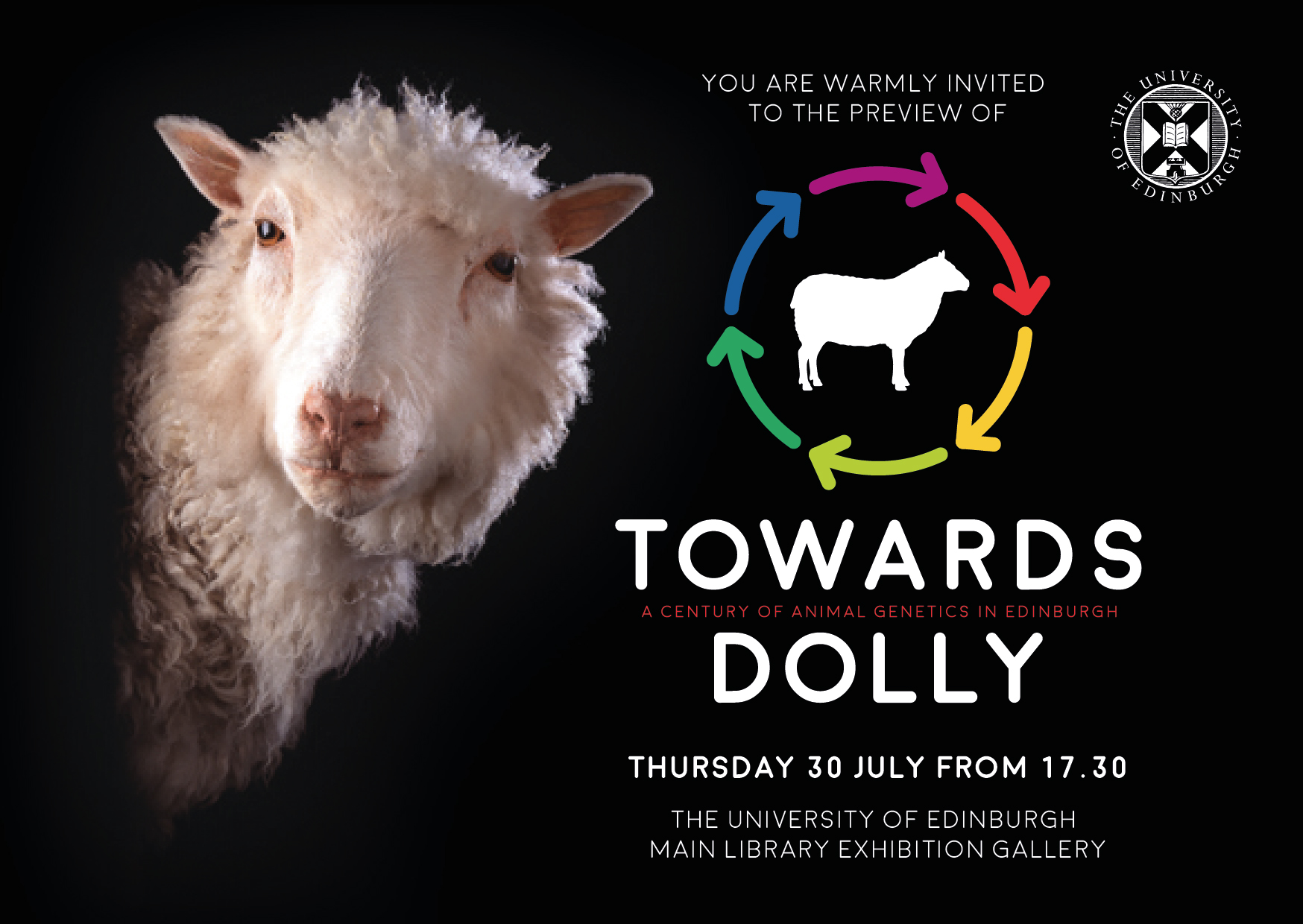
Featuring Dolly the sheep, on loan from National Museums Scotland alongside unique material from the University’s collections, this exhibition celebrated the individuals and institutions who made, and continue to make, extraordinary advances in animal and human health.
‘…Something Blue’, the spring exhibition at the Main Library Exhibition Gallery
3 April – 27 June 2015
From blue stockings and opals to lullabies and rhapsodies, this display brings together a selection of exhibits from the breadth of the University’s collections under the multi-layered symbolism of the colour blue.
19 June 2015: Professor Ian Campbell, “The Horst Drescher Collection”
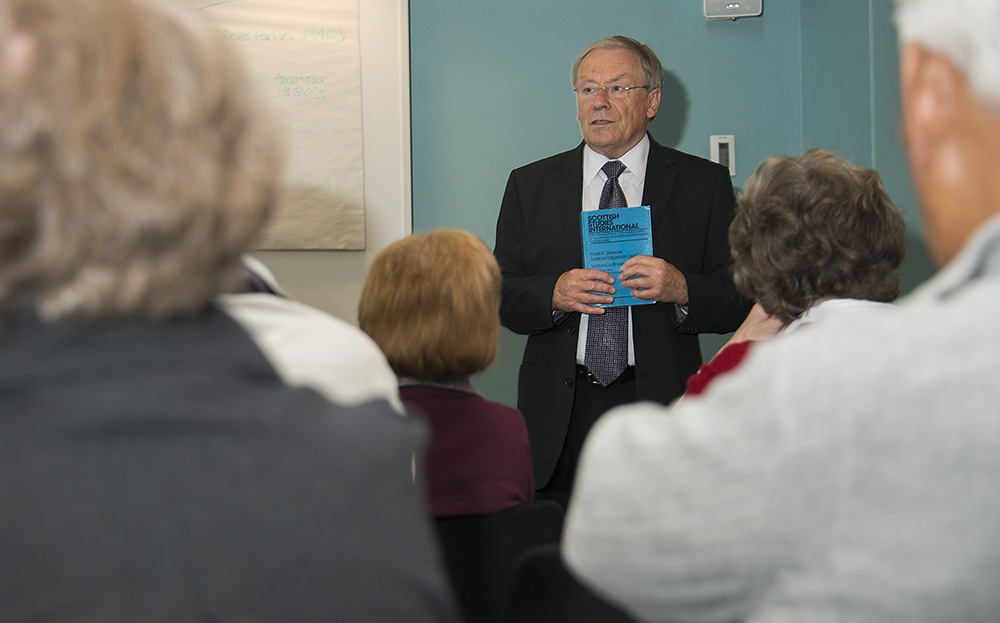
Ian Campbell, Professor Emeritus of Scottish and Victorian Literature delivering a talk about the Horst Drescher Collection for the Friends, in the seminar room of the Centre for Research Collections, June 2015
Horst W. Drescher was a distinguished German teacher of English and Scottish literature, and professor at the University of Mainz at Germersheim where he founded the Scottish Studies Centre and built a fine library of Scottish texts for teaching and scholarship. His interests in Scottish eighteenth century literature took him frequently to Edinburgh, and he was conspicuously a return visitor to the Institute of Advanced Studies at a time when few people managed more than one visit.
His scholarship encompassed a great deal of editing, and Henry Mackenzie’s work was his main focus. He also found time (in addition to a heavy teaching load) to grow the Scottish Studies Centre, organise many international events (including a memorable Carlyle conference in 1981), and found the Scottish Studies Newsletter which still appears today and is a valuable compendium of work in progress and recently published scholarship round the world.
At home he built up a superb collection of Scottish texts of the twentieth century, but his chief pride was the library of calf-bound texts of the Enlightenment period, meticulously shelved and cleaned every year. The generosity of Frau Christel Drescher means that the cream of that collection has come to join the Library special collections, in the Centre for Research Collections, where on June 19 there will be an opportunity to see not only some of these volumes but also some of the University’s existing holdings which are related to them.
20 May 2015: Guided tour of the new Noreen and Kenneth Murray Library, King’s Buildings
The Noreen and Kenneth Murray Library holds the University’s principal printed book collections in biology, chemistry, engineering, geosciences, mathematics, physics and statistics as well as the Edinburgh Mathematical Society’s book collection. The tour will be conducted by Deputy Director of User Services Division, Richard Battersby.
2 April 2015: Exhibition Opening: …Something Blue
From blue stockings and opals to lullabies and rhapsodies, this display brings together a selection of exhibits from the breadth of the University’s collections under the multi-layered symbolism of the colour blue.
Exhibition: Emma Gillies: Rediscovered
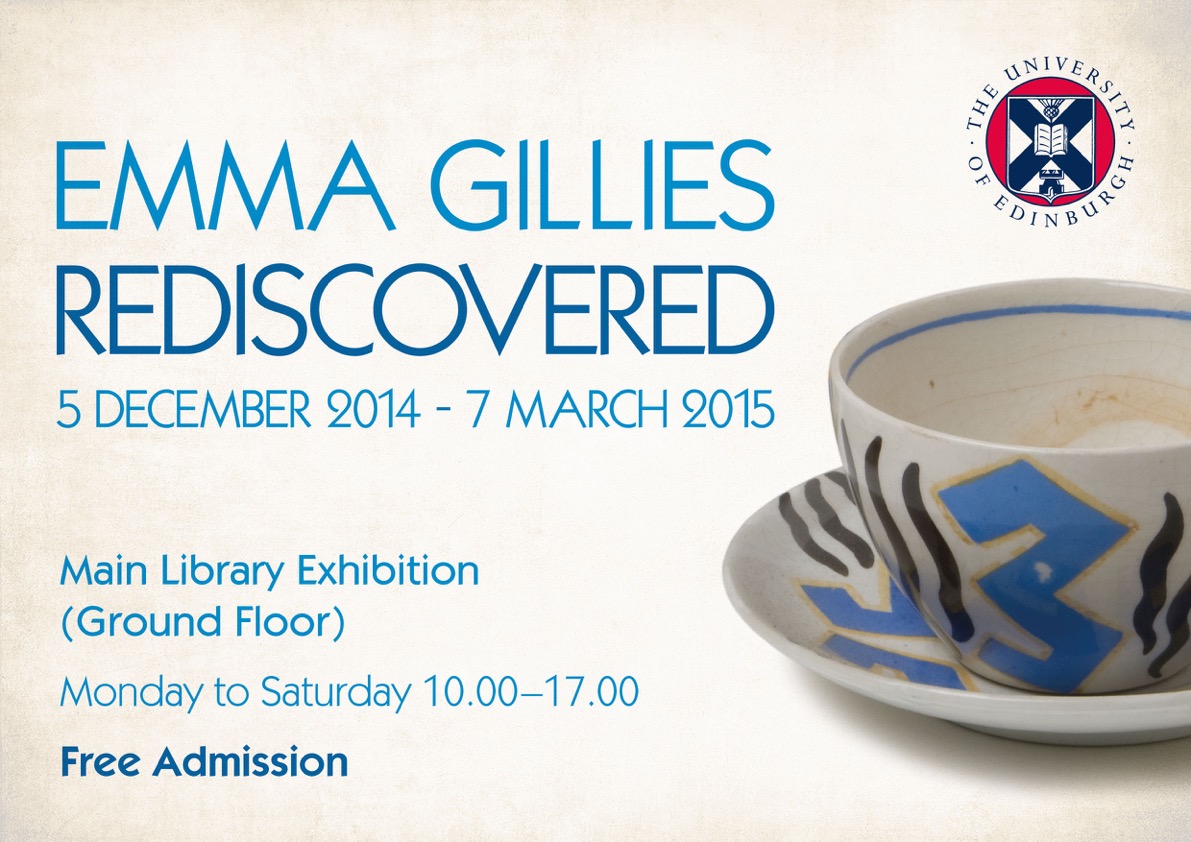
Emma Gillies (1900-1936) was the younger sister of the painter, William Gillies. A highly talented potter, she studied at Edinburgh College of Art. For further information on the exhibition please click here.
19 February 2015: Talk and visit to the Digital Imaging Unit, and viewing of Robert Barker’s Panorama of Edinburgh (1792)
The Digital Imaging Unit is the photography department for the Centre for Research Collections (CRC). Every week beautiful and fascinating books, manuscripts and objects pass through the department for digitisation. In this special viewing, the DIU photographers, Susan Pettigrew & Malcolm Brown, welcome Friends to the department. They will be demonstrating some of their equipment and techniques and showing off some of the beautiful images that are created. If you would like to learn more, the DIU blog gives a fascinating insight into their work (http://libraryblogs.is.ed.ac.uk/diu/about-us/).
The Panorama flourished in the 18th and 19th centuries as a means to create ‘immersive’ images of a place. Barker began his work in Edinburgh, going on to create images of other cities. Friends are invited to view Barker’s Edinburgh panorama, a fascinating historical snapshot of Old Edinburgh. CRC staff will be on hand to introduce and explain this intriguing object.
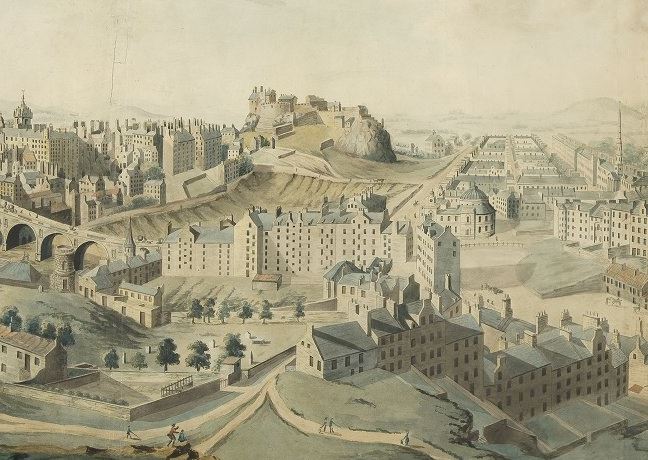
Robert Barker, Panorama of Edinburgh (detail), 1792
4 December 2014: Emma Gillies: Rediscovered
Emma Gillies (1900-1936) was the younger sister of the painter, William Gillies. A highly talented potter, she studied at Edinburgh College of Art. The exhibition ran from 5 December 2014 to 7 March 2015.
25 November 2014: AGM
FOEUL Annual Report 2014 [pdf]
Presentation on the New College collections from Christine Love-Rogers
Founded in 1843 as the library of the Free Church College, New College Library now serves the University’s School of Divinity. It is one of the largest theology libraries in the UK, with over a quarter of a million items. As well as incunabula, early Bibles, and early Pamphlet collections, its large and rich special collections include the papers of Thomas Chalmers, J.H. Oldham and James S. Stewart.
Dr Alison Jack and Christine Love-Rodgers will be highlighting some of these special collections for the Friends. A selection of New College Special Collections items was on display in the Funk Reading Room of New College Library.
7 October 2014: Visit to the Edinburgh College of Art Library, including a talk by Jane Furness on the fine collection of artists’ books
Friends were invited to attend the official opening of the Rashid Al-Din Exhibition in the Main Library Forum on 1 August 2014
The Jami’ al-Tawarikh (or “World History”) of Rashid al-Din is one of the most important illustrated medieval manuscripts to have survived from either East or West. The manuscript is one of the greatest treasures of Edinburgh University Library.
Datable to 1314, it was produced in the city of Tabriz, a seat of power of the Ilkhanid rulers, descendants of the Mongol Chingiz Khan, who held sway over an empire encompassing Persia and large parts of present-day Azerbaijan and Turkey.
This exhibition offered a unique chance to view folios of the original manuscript, complemented by loans relating to the material culture of fourteenth-century Iran from the National Museum of Scotland.
19 June 2014: Visit to the newly refurbished Edinburgh and Scottish Collections in the Edinburgh Central Library on George IV Bridge
Exhibition: Fifty Years, Fifty Books: purchases by the Friends of Edinburgh University Library, 1962-2012
28 March to 14 June 2014
This exhibition celebrated the continued support of the Friends, showcasing acquisitions from the foundation of the Friends in 1962, up to the present day. Exhibits range from early editions of English drama and modern Scottish literary papers, to beautiful illustrated ‘Birds of the Pacific Slope’ and facsimiles of medieval manuscripts.
“I am very impressed by the quality of the current ‘Friends Purchases’ exhibition.
Please do pass on my thanks and appreciation to those who set it up.”
Professor Sir Timothy O’Shea
Principal & Vice-Chancellor
27 March 2014: Private View: Fifty Years, Fifty Books: purchases by the Friends of Edinburgh University Library, 1962-2012
Exhibits ranged from early editions of English drama and modern Scottish literary papers, to the beautiful illustrated ‘Birds of the Pacific Slope’ and facsimiles of medieval manuscripts.
The exhibition was open to the public from 28 March to 14 June 2014.
12 March 2014: Extraordinary General Meeting and Talk
The EGM had a single agenda item: to consider a new Constitution of the Friends (see below).
Grant Buttars, Deputy University Archivist, then spoke on “Over 400 Years of Human Achievement: the University of Edinburgh as seen through its Archives”.
‘I will look at a selection of material from our archives to show snapshots of University life and activity since its foundation. There is no grand narrative, as this story is not complete, but instead a focus on the specific as a means of highlighting the diversity and complexity of these collections, together with something about why we have some of them as well as some of the purposes to which they get put’.
- Additional details of the EGM are available here: FoEUL flyer for EGM March 2014 [docx]
- The new Constitution is available here: FoEUL final draft Constitution [docx]
___________________________________
Exhibition: Collect.Ed: Curiosities from the University’s Collections
6 December 2013 – 1 March 2014
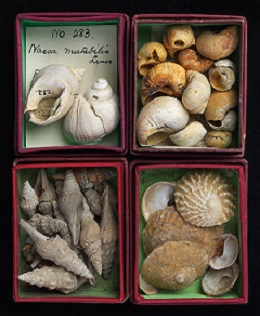
Shells from Charles Lyell’s collection, Geology Museum, University of Edinburgh
For thousands of years the obscure and unfamiliar has remained a source of inquiry. Early collecting focused on the unclassified and unique, aiming to impress and enlighten. This student-curated exhibition will bring together the unexpected and will showcase the rare and remarkable highlights from the University’s Collections.
19 November 2013: AGM
Agenda – AGM – 2013 [.doc]
Minutes of the FoEUL AGM – 26 Nov 2012 [.doc]
Talk by Lindsay Levy: “The Great Unknown Cataloguer”
“The Great Unknown Cataloguer”, George Huntly Gordon, the son of Major Pryse Lockhart Gordon, was Sir Walter Scott’s nearly-deaf amanuensis and protégé. Gordon was the first cataloguer of Scott’s library, and the man who wrote, but was never credited for, the 1838 catalogue. Working from notebooks of Scott’s discovered at Abbotsford House in the last five years, Lindsay Levy was able to put together a picture of how this first catalogue was created. The talk will also explore Scott’s own unrecognised skills as a bibliographer.
The contents of Sir Walter Scott’s library at Abbotsford were donated to the Faculty of Advocates through a deed of entail executed in 1839. Starting in 2003, a full cataloguing and conservation project was undertaken by the Faculty to preserve this wonderful collection. The completion of the online cataloguing of the 9,000 volume library took 10 years and marked the culmination a marathon task for Lindsay Levy, the Faculty’s former Rare Books Cataloguer.
23 October 2013: Joe Marshall and Elizabeth Quarmby Lawrence,“The Edinburgh College of Art Rare Books Collection”
Edinburgh College of Art, which merged with the University of Edinburgh in 2011, built up a rich collection of rare and important books and other paper items. These include magnificent architectural books, unique hand-painted shawl designs, textile samples, private press books and fine bindings. All of the books have relevance to the College’s traditions of teaching art and design. The collection was transferred to the Centre for Research Collections (CRC) at the University’s Main Library in November 2011. The books are now catalogued and kept in climate-controlled secure strongrooms where they will be protected and preserved.
Fringe Festival Exhibition: “Edinburgh 300: Cradle of Chemistry”
The exhibition will focus on three key themes to illustrate the contribution the School has made to Chemistry: Cradle of Chemistry (how Edinburgh has shaped the world), Chemistry and Economy (how Chemistry has contributed to economy and policy), Chemistry and Discovery (significant discoveries and achievements). Highlights will include Joseph Black’s balance (Black was the first to employ the analytical balance in chemical investigations) and Alexander Crum Brown’s first model of sodium chloride, made with knitting needles and balls of wool!
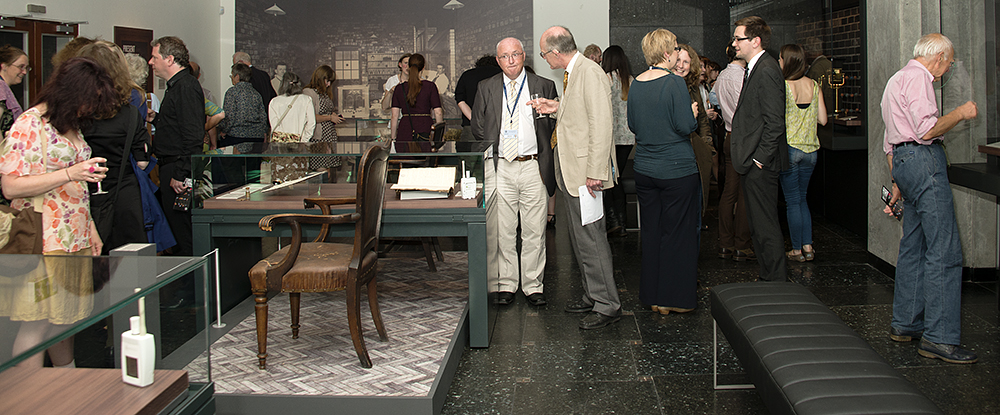
Opening evening of the exhibition
_________________________
26 June 2013: Visit to The Lady Smith of Kelvin Veterinary Library, Easter Bush
William Dick established his own Veterinary School in 1818 and in 1906 in memory of William the University named its own Veterinary College the Royal (DICK) Veterinary College which houses the newly refurbished Lady Smith of Kelvin Veterinary Library. Planning for the Teaching building started in 2003 when it was realised that in order to provide students with a quality learning experience the previous Summerhall/Easter Bush split was no longer sustainable. The Teaching Building was designed by BDG McColl Architects in July 2005 and completed in January 2011. The first floor houses in Library while the ground floor presents an attractive catering area, plus teaching facilities. The building can accommodate up to 950 students and 200 staff. The Library itself is 332m sq. and boasts 750 linear metres of shelving. There are 99 study spaces, plus 5 study rooms.
_________________________________
23 April 2013: Gordon Wright, “A Career in Publishing and Photography – The Gordon Wright Archive at the University Library”
For more on this important archive, purchased with a grant from the Friends, please see Recent Purchases.
Exhibition: Masterpieces III
![image003[2]](https://friendsofeul.co.uk/wp-content/uploads/2012/07/image0032.jpg?w=300&h=221)
![image003[2]](https://friendsofeul.co.uk/wp-content/uploads/2012/07/image0032.jpg)
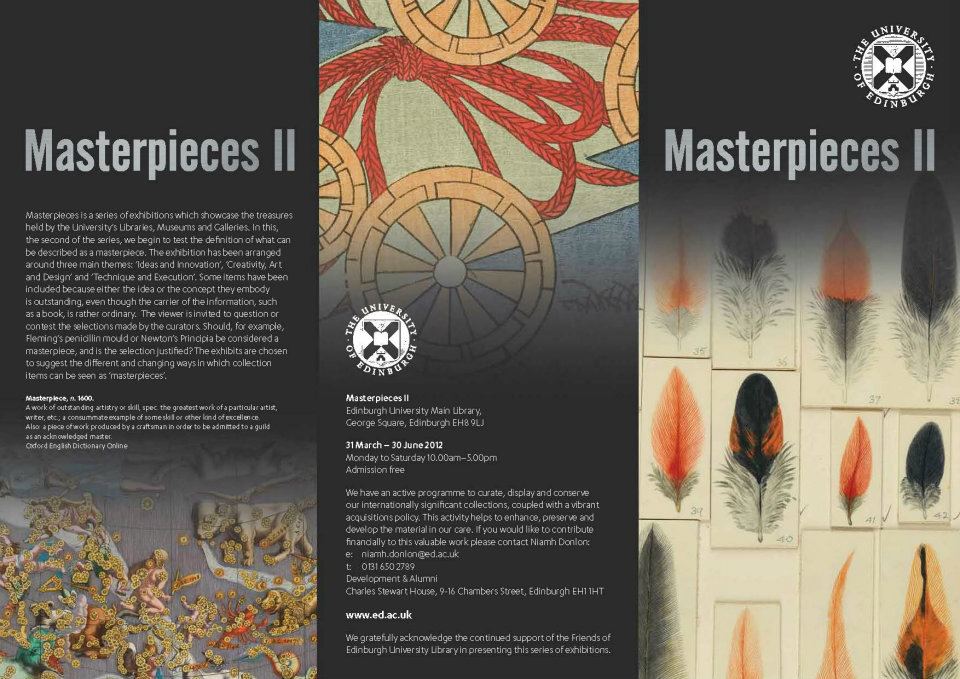
Masterpieces is a series of exhibitions which showcase the treasures held by the University’s libraries, museums, archives and galleries. This is the third and final exhibition in the series, in which the definition of a ‘masterpiece’ is pushed to its limits. Focusing on the overall theme of science and medicine, chosen items reflect the themes of ‘science as innovation’, ‘science as art’, and ‘science as statement’.
_____________________________
City of Words: Writers, Readers and Critics in Edinburgh. 3 August – 27 October 2012
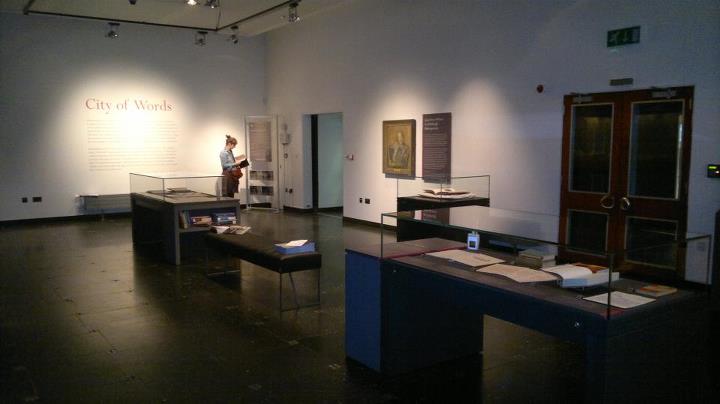
The University opened its exhibition ‘City of Words: Writers, Readers and Critics in Edinburgh’ on 3 August 2012. The exhibition tells the fascinating story of how the writing, reading and criticism of literature have been entwined in Edinburgh over the past 250 years. The exhibition showcases books, letters and other artefacts illustrating the life and work of writers, critics and students involved in literature study in the university. It also shows how this study has been intimately interconnected with the literary life of the city more generally, through diverse contacts between the university and Edinburgh writers, theatres, and publishing houses.
Pictures taken by the exhibition organiser show the main exhibition hall and some individual displays:
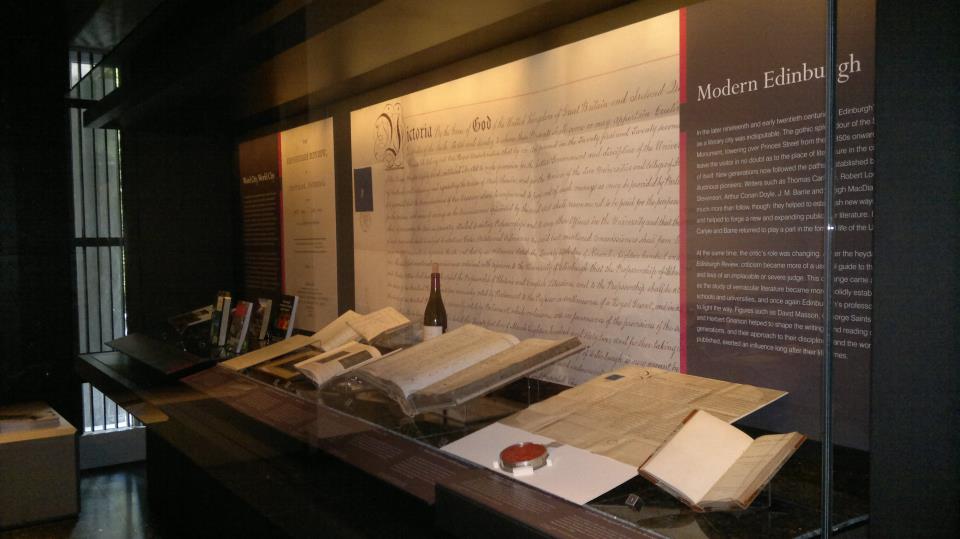
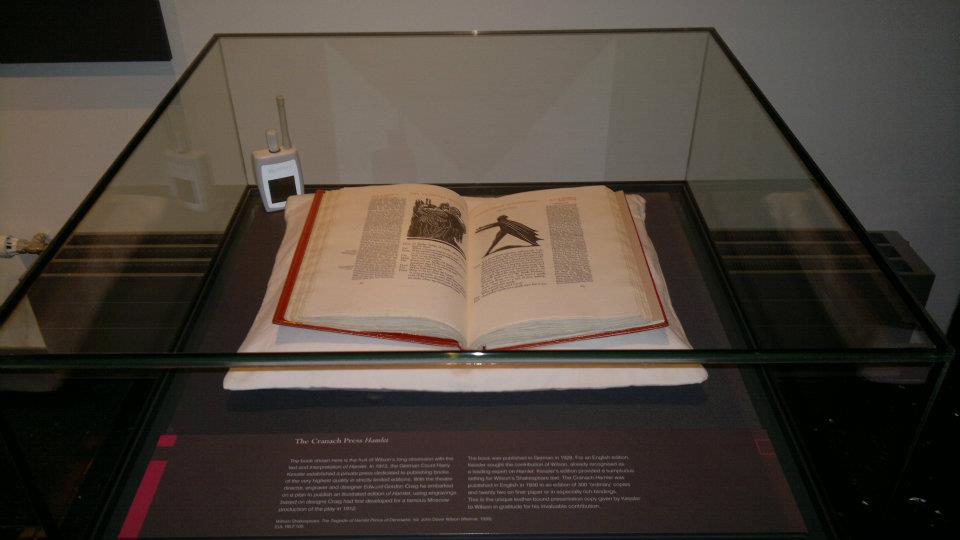
Friends who attended our January 2012 AGM may remember Dr James Loxley’s tale of the rediscovery of William Shakespeare’s The Tragedie of Hamlet Prince of Denmarke, ed. John Dover Wilson (Weimar, 1930) in a dusty English literature department storage cabinet. Thankfully, this unique book has been cleaned of dust and is displayed alongside other fascinating exhibits.
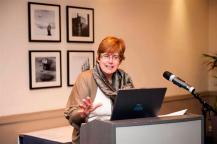
20 June 2012: Past, Present and Future Conditional: Reflections on a Chapter in Libraries by Sheila Cannell
 The Friends of Edinburgh University Library